
The Louisiana Pantry: An A-to-Z Guide to Cajun and Creole Ingredients
A well-stocked Louisiana pantry is where Cajun and Creole cooking starts, long before you turn on the stove. Louisiana cooking isn’t complicated, but it is specific. Étouffée made with imported crawfish tails just doesn’t taste like home. Red beans without a ham hock or tasso are missing something you can’t quite name. And filé stirred into gumbo at the table is a flavor you won’t find on a typical spice rack.
This A-to-Z guide covers the Cajun and Creole ingredients I reach for most, from andouille to Zatarain’s. Some are everyday staples you already have. Others you’ll probably only find at a Louisiana grocery store. When I lived away from Louisiana for 10 years, it was hard to find ingredients like boudin, crawfish, and mirlitons, so I’ll show you where to find them even if you’re not local.
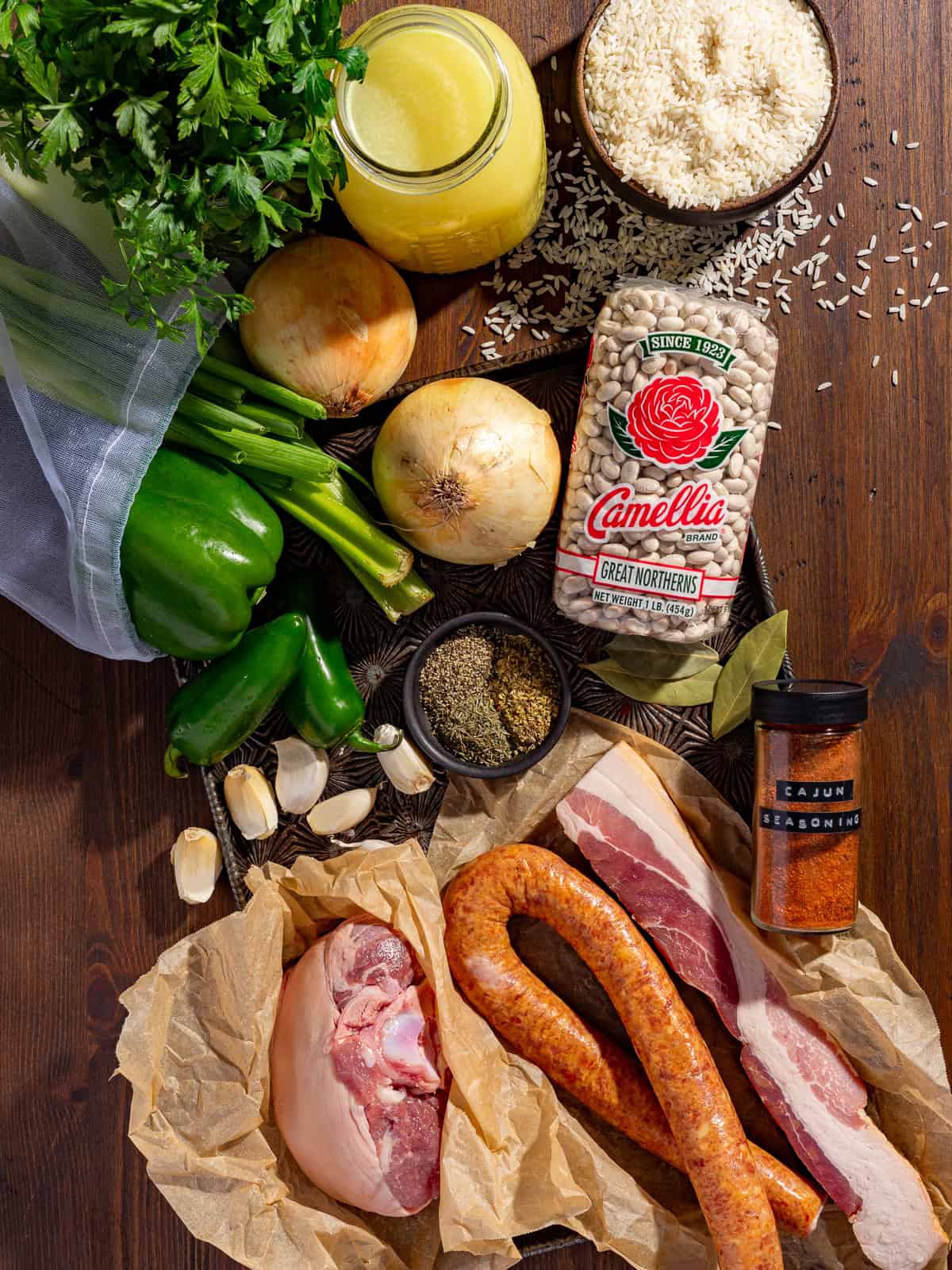
How to Use This Guide
- Each ingredient gets a short description of what it is and how it’s used in Louisiana cooking.
- Ingredients with their own full guide have a link at the end of the entry. Tap through for everything you need to know about it.
- Suggested recipes are also linked so you can go from “what is this?” to “what do I make with it?”
Louisiana Ingredients
Andouille
A heavily smoked and spiced pork sausage that’s commonly found in gumbos and jambalayas. Real Louisiana andouille is firm, smoky, and packed with garlic and pepper.
Try it in: Jambalaya
Bacon Grease
Every South Louisiana kitchen has a jar or can of it by the stove. Strain and reserve grease next time you cook bacon. A spoonful adds smoky depth to greens, beans, cornbread, and smothered vegetables.
Bay Leaves
Do they really do anything? My vote is yes! They add a subtle earthy herbaceous flavor to long simmered soups, stews, and stocks. My Paw Paw cooked outside under the oak trees, and the first time I found a bay leaf in his jambalaya, I was sure one had fallen in from the yard!
Beans
Red beans get the most attention, but they’re not the only beans in the pot. White beans cook up much like red beans, butter beans get smothered in the summer, and black-eyed peas show up on New Year’s Day for luck. They all simmer low and slow with a seasoning meat and get served over rice.
Try it in: Red Beans and Rice and White Beans
Blue Crab
Caught in the Lake Pontchartrain basin and surrounding marshes, blue crab shows up boiled whole and picked into lump and claw meat. Crabmeat is what makes a Louisiana seafood dish feel special.
Try it in: Corn and Crab Bisque
Boudin
A sausage of pork, rice, onions, and seasoning, stuffed into a casing. It’s sold hot at gas stations and meat markets all over Acadiana. Steam it or grill it and serve it with Creole mustard, cane syrup, or pepper jelly.
Try it in: a savory king cake twist, Boudin King Cake

Butter
If Cajun cooking leans on lard and bacon grease, Creole cooking leans on butter. It’s the base of New Orleans BBQ shrimp, meunière sauce, and cream sauces like Crawfish Monica, and a lot of cooks make a peanut butter-colored roux for étouffée with butter instead of oil. Keep plenty on hand.
Cajun Seasoning
A bold, peppery blend of salt, cayenne, black and white pepper, paprika, garlic, and onion. It runs hotter and has fewer herbs than Creole seasoning. Sprinkle it on fried fish, roasted potatoes, popcorn, and crawfish boil leftovers. Slap Ya Mama, from Ville Platte, is a favorite store-bought blend, but homemade is easy and lets you skip the extra salt.
Try it in: Homemade Cajun Seasoning
Cane Syrup
Sugarcane juice boiled down into a dark, rich, caramelized syrup. Steen’s in the yellow bottle is the classic. Pour it over biscuits, drizzle it on boudin, or use it as you would use molasses or maple syrup.
Canned Tomatoes
Tomatoes are a big part of what separates Creole from Cajun cooking. Keep diced tomatoes and tomato paste in the pantry for shrimp Creole, sauce piquante, and red gravy. And don’t forget Ro-Tel, diced tomatoes with green chiles, for jambalaya, rotel dip, and anything that needs a little kick.
Catfish
Fried catfish is a Friday-night Lenten staple. It’s usually dredged in seasoned cornmeal and served with fries and tartar sauce. It’s also great in courtbouillon, étouffée, or blackened. Look for U.S.-raised fish.
Cayenne
Most of the heat in Cajun and Creole food comes from ground cayenne pepper. A little goes a long way, so add it in pinches and taste as you go.
Chicory Coffee
Coffee blended with roasted chicory root, which makes it bold, a little bitter, and slightly chocolatey. It’s the coffee behind a New Orleans café au lait. Find it served at the famous Café Du Monde.
Cornmeal
Used for dredging fried catfish and shrimp, baking cornbread, and making coush-coush, the old-school Cajun cornmeal breakfast.
Try it in: Cajun Cornbread
Crawfish
The unofficial mascot of South Louisiana. Fresh, live crawfish are a spring tradition, boiled by the sack. Frozen tail meat (with the fat) gets you étouffée year-round. Check the label, and make sure you’re getting a real Louisiana product.
Try it in: Crawfish Étouffée or Crawfish Monica
Creole Cream Cheese
A tangy, soft New Orleans farmer’s cheese, somewhere between yogurt and ricotta. It’s traditionally eaten with sugar, cream, and fruit, and it makes an incredible cheesecake.
Creole Mustard
A coarse, spicy brown mustard with a sharp kick from spices and horseradish. It’s the key to a good remoulade and the mustard you want on a po-boy.
Try it in: Remoulade Sauce
Creole Seasoning
An all-purpose blend of salt, paprika, cayenne, garlic, onion, and herbs. It tends to be more herbaceous than Cajun seasoning. Tony Chachere’s is a household name, but homemade lets you control the salt and heat.
Try it in: Homemade Creole Seasoning
Creole Tomatoes
Louisiana’s prized summer tomato, grown in the rich soil along the Mississippi River in parishes like Plaquemines and St. Bernard. Less of a specific botanical variety, and more about the location they are grown in. They’re juicy, sweet, and tangy, and they’re at their best in late spring and early summer. New Orleans even throws them a festival every June. Most people eat them sliced with salt and pepper, on a sandwich with mayo, or in a simple salad.
Dried Herbs and Spices
The everyday seasonings that absolutely belong in your Louisiana pantry: garlic powder, onion powder, sweet paprika, smoked paprika, dried oregano, dried basil, dried thyme, white pepper, cayenne pepper, and black pepper. They’re the building blocks of Cajun and Creole seasoning, and show up in most every dish.

Eggplant
Sicilian immigrants influenced South Louisiana culture with Saint Joseph’s Altars, red gravies, and of course, eggplant. A summer favorite, often stuffed with shrimp and crab, fried in sticks, or cooked down into eggplant dressing.
Filé Powder
Ground dried sassafras leaves with an earthy, almost root-beer-like flavor, first used by the Choctaw Native Americans of Louisiana. This green powder thickens gumbo and is stirred in at the end, off the heat, never boiled. Some families use filé, some use okra, and the debate is half the fun. Hank Williams even sang about filé gumbo.
French Bread
New Orleans French bread has a thin, crackly crust and a light, airy middle. It’s built for po-boys, sopping up gravy, and bread pudding. A dense baguette just isn’t the same. Leidenheimer is a classic.
Garlic
Used generously in almost everything. If a recipe calls for two cloves, most Louisiana cooks quietly double it. You want to keep fresh garlic cloves and garlic powder stocked. We’re usually using both in the same dish.
Green Onions
AKA scallions. The finishing touch on gumbo, jambalaya, étouffée, and red beans. The whites cook in, and the greens go on top. Adds a bit of freshness to otherwise heavy dishes.
Grits
Coarsely ground dried corn, cooked low and slow into a creamy side. In New Orleans, grits show up at breakfast and brunch as a side dish or as part of a main dish like grits and grillades. I prefer the old fashioned stone-ground grits. They take longer to cook but have far better flavor and texture than quick grits. Instant grits aren’t worth it.
Try it in: Creole Shrimp and Grits
Gulf Shrimp
Wild-caught shrimp from the Gulf are sweeter and firmer than most imports. Look for “wild-caught Gulf” on the label, and buy heads-on when you can, because the heads and shells make incredible stock. White shrimp are prevalent in the fall, and brown shrimp start ramping up in the late spring.
Try it in: Shrimp Creole
Ham Hock
A pork knuckle that simmers low and slow to flavor stews, beans and greens. Find them fresh or smoked.
Herbsaint
An anise-flavored liqueur made in New Orleans. It was created in the 1930s as a stand-in for absinthe, which was banned at the time. It gives oysters Rockefeller their signature flavor, and a rinse of it in the glass is what makes a Sazerac a Sazerac. A little bottle lasts a long time.
Hog’s Head Cheese
Not actually cheese. It’s seasoned pork set in its own natural gelatin, then sliced cold and eaten on crackers. It’s a Cajun holiday and party staple. I’ll have to dig out my Paw Paw’s recipe to share with y’all.
Hot Sauce
Louisiana hot sauce is thin, vinegary, and built on cayenne or tabasco peppers. Crystal, Tabasco, and Louisiana Brand all have loyal fans, and everyone has a favorite.
Kitchen Bouquet
A browning and seasoning sauce in a little bottle that’s been in Southern pantries for generations. A few drops turn gravy a deep, rich brown, so it’s a handy secret for rice and gravy, smothered pork chops, and roast. It’s for color more than flavor, and nobody has to know you used it.
Lard
Rendered pork fat, the old-school choice for frying and flaky biscuits. You’ll still find it in plenty of grandmothers’ kitchens across Cajun country.
Long-Grain Rice
Louisiana is a rice state, and rice goes under or into almost everything: gumbo, étouffée, red beans, jambalaya, and dirty rice. Long-grain cooks up fluffy and separate, which is exactly what you want, though there are some short-, medium-grain, and parboiled fans out there.
Full guide: How to Cook Perfect Rice
Mayonnaise
We’re slathering it on thick around here, and we have a favorite. Blue Plate is a New Orleans brand, and no dressed po-boy, potato salad, or remoulade is complete without it. FYI, “dressed” means your po-boy will come with mayo, lettuce, tomatoes, and pickles. Pronounce it like a Yat — “my-nez”.
Try it in: Potato Salad for Gumbo
Mirliton
A pale green, pear-shaped squash (you may know it as chayote) that grows on backyard vines. It’s mild and crisp, and it’s traditionally stuffed with shrimp and served at the holidays. Look for them at Mexican and Latin American markets under the name chayote squash.
Try it in: Shrimp and Mirliton Casserole

Muffuletta Olive Salad
A chopped mix of olives, pickled vegetables, garlic, and olive oil. It goes back to the early 1900s New Orleans Sicilian community. It’s the star of the muffuletta sandwich, and it’s just as good on pasta, pizza, or a cheese board.
Okra
Okra thickens gumbo, gets smothered with tomatoes and shrimp, and fried in cornmeal. If you think you don’t like okra, you probably haven’t had it cooked the Louisiana way.
Oysters
Gulf oysters are eaten raw, chargrilled with garlic butter and cheese, fried for po-boys, baked Rockefeller-style, and folded into holiday dressing. Love ‘em or hate ‘em, they’re a Louisiana favorite.
Parsley
Flat-leaf parsley often goes in alongside green onions at the end of cooking for a fresh finish. Probably our most used herb.
Pecans
Louisiana pecans go into pralines, pecan pie, candied pecans, and just about every holiday dessert. If you’re in Louisiana, it’s pronounced puh-KAHN, NOT PEE-can.
Pepper Jelly
A sweet-hot jelly made from bell peppers, hot peppers, sugar, and vinegar. Pour it over a block of cream cheese and serve it with crackers and you have a 1-minute appetizer. It also makes a quick glaze for wings and pork chops, and it’s great on a hot biscuit.
Pepper Sauce
Also called pepper vinegar. A bottle of small hot peppers steeped in vinegar, different from hot sauce. It sits on the table for splashing on greens, beans, and fried fish.
Pickled Pork
Also called pickle meat. It’s pork cured in a tangy vinegar brine, born out of a necessity to preserve meat. It’s the old-school seasoning meat for a pot of beans.
Redfish
Red drum, a Gulf favorite. It’s famous blackened in a screaming-hot cast-iron skillet, and just as good grilled “on the half shell” with the scales and skin left on.
Roux
Flour and fat cooked together until it goes anywhere from blonde to dark chocolate brown. It’s the foundation of gumbo, étouffée, and sauce piquante, and the color you choose changes everything. Look out for my first cookbook, Roux, coming in 2027. Sign up here to be the first to hear about it.
Full guide: How to Make a Roux
Try it in: Chicken and Sausage Gumbo
Satsumas
Sweet, seedless, easy-peel mandarins grown in South Louisiana. They show up in late fall and winter, and they’re perfect for eating out of hand, baking, glazes, and cocktails.
Seafood Stock
Made from shrimp shells and heads, crab bodies, or crawfish shells, it’s the secret to seafood gumbo and étouffée that taste like the Gulf instead of the carton.
Full guides: Homemade Shrimp Stock or Seafood Stock
Smoked Sausage
The everyday workhorse. It’s milder and finer-ground than andouille, and it goes into red beans, jambalaya, and just about anything.
Tasso
Spicy, heavily smoked cured pork. It’s a seasoning meat, meant to be chopped small and used in beans, pasta, and cream sauces, not eaten like ham.
Trinity
Yellow onion, celery, and green bell pepper make up the Holy Trinity. Chopped and cooked together to start nearly every Cajun and Creole dish. It’s Louisiana’s version of French mirepoix, with bell pepper standing in for carrots.
Full guide: The Holy Trinity of Cooking

Worcestershire
A key player in New Orleans BBQ shrimp (which has nothing to do with barbecue), plus marinades, gravies, and a good Bloody Mary.
Yams
In Louisiana, “yams” usually means our orange-fleshed sweet potatoes. We candy them, bake them into pie, and make them into a casserole so sweet with marshmallows and brown sugar, it might as well be a dessert.
Zatarain’s Crab Boil
The classic New Orleans boil seasoning. It comes in bags or liquid concentrate for crawfish, shrimp, and crab boils, and a splash of the liquid wakes up potatoes, corn, and even boiled eggs.
Just Getting Started? Grab These First
If you’re stocking a Louisiana pantry from scratch, start with these. Together they’ll get you through gumbo, jambalaya, red beans, étouffée, and more.
- Onions, celery, and green bell pepper (the trinity)
- Garlic
- Green onions
- Long-grain rice
- Smoked sausage
- Red beans
- Creole seasoning
- Cayenne
- Louisiana hot sauce
- Bay leaves and dried thyme
Don’t Live In Louisiana? Here’s How to Shop
Most of this list is easy to find anywhere. For the rest, here’s where to look.
- Check the international or Southern aisle. Many big grocery chains carry Zatarain’s, Tony Chachere’s, Camellia beans, Crystal, and Steen’s.
- Order groceries online. Online stores like Cajun Grocer carry an assortment of all things South Louisiana food.
- Order specialty meats online. Several Louisiana meat markets like The Best Stop ship andouille, tasso, boudin, and cracklins nationwide, packed cold.
- Buy crawfish tails frozen. Look for “Louisiana” on the package, and choose tails packed with the fat for the best flavor. Start with Louisiana Crawfish Company.
- Ask your fish counter for Gulf shrimp. Many stores can special-order wild-caught Gulf shrimp if they don’t stock it.
- Make your own. Creole seasoning, pepper sauce, seafood stock, and even Creole cream cheese are all doable at home.
Frequently Asked Questions
They share a lot, including the trinity, roux, and rice. Creole cooking, rooted in New Orleans, tends to use more tomatoes, butter, and cream. Cajun cooking, from rural Acadiana, leans on smoked meats, cast iron, and whatever came from the land and bayou.
Onion, celery, and green bell pepper, chopped and cooked together as the base of most Cajun and Creole dishes.
In a pinch, yes. But kielbasa is milder and less smoky, so your gumbo or jambalaya won’t have the same depth.
Both start with salt, paprika, cayenne, garlic, and onion. Creole seasoning adds more herbs, like oregano and thyme. Cajun seasoning skips most of them and leans on pepper, so it’s bolder and hotter. In most recipes, you can use one in place of the other.
No. Most cooks use one or the other as a thickener, though some families use both, and some neither.
Several Louisiana meat markets, like Best Stop, ship it frozen nationwide. It reheats well in the oven or air fryer.
Stock Up and Start Cooking
You don’t need every ingredient on this list to start cooking Louisiana food. Grab the basics, pick up the specialty items as you find them, and before long you’ll be cooking by feel. Bookmark this guide and come back to it, because I’ll keep adding to it as new ingredient guides go live.
What’s in your Louisiana pantry that I missed? Tell me in the comments. I’d love to hear what your family always keeps on hand.