
White Rice Recipe
This white rice recipe shows you how to make perfectly fluffy long grain white rice on the stove without a rice cooker! Most people make rice using the wrong rice-to-water ratio, which leaves the rice mushy. I’ll show the simple fix for light, separate grains every time. Perfect for serving with New Orleans classics like Cajun Chicken and Sausage Gumbo or Louisiana Red Beans.
Rice is one of the essentials in my Louisiana pantry guide.

Rice is a staple in so many cultures, including South Louisiana. If you’re serving Gumbo, Red Beans, Shrimp Creole, Étouffée, or Dirty Rice, then you need to know how to make rice the right way! I’ve made this recipe dozens of times and finally perfected the method to get fluffy, flavorful results every time (no rice cooker needed).
Perfect Water-to-Rice Ratio for White Rice
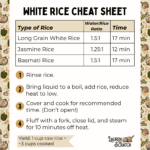
For a long time, like most people, I used a 2:1 water-to-rice ratio, and my rice always turned out mushy. The perfect ratio for long grain white rice is actually 1.5:1, that’s 1½ cups liquid for every 1 cup of rice. Using less liquid and allowing the rice to steam after cooking is the key to getting light, fluffy, perfectly cooked grains.
I’ve tested a variety of liquid-to-rice ratios, including 2:1 and 1.75:1, and both produced sticky, gluey rice. The 1.5:1 ratio yielded the best texture. I’ve also experimented with different cooking liquids like water, different broths, and even tomato purée. I always recommend using a flavorful broth over plain water to boost the taste.
Save this white rice cheat sheet below for next time you make rice!

Types of Rice (and the Best Kind for Cajun Dishes)
Most people in south Louisiana use long grain white rice for their Cajun dishes.
There are different types of rice with different colors, textures, and grain lengths. The longer the grain of rice, the fluffier it will be when cooked and the shorter the grain, the more sticky it will be.
- Brown Rice vs White Rice: Brown rice is a whole grain rice, whereas white rice has had the bran layer removed. Brown rice is chewier, and takes longer to cook, with a slightly more nutty flavor than white rice. Brown rice is also one of the least sticky varieties of rice.
- Long Grain Rice: This rice has a longer grain, and usually cooks up with fluffy separated grains. Basmati rice, brown rice, and jasmine rice are all long grain varieties. These are all perfect for serving with cajun dishes.
- Medium Grain Rice: This rice is in the middle of fluffy and sticky. Arborio rice, the type of rice used to make risotto, is a medium grain rice. See Short Rib Risotto for a tutorial on cooking arborio rice.
- Short Grain Rice: AKA glutinous rice. This is the stickiest variety and often used to make sushi rolls.
Ingredients & Substitutions

See the recipe card below for the complete list of ingredients and measurements.
- Long grain white rice – This cooking method is for long grain white rice. Other types, like jasmine or short grain, require different water ratios and cook times. The closest thing to long grain white rice is basmati rice.
- Unsalted butter – Butter is optional, but toasting rice in a little butter adds flavor and richness. You can substitute for olive oil or skip it if preferred.
- Chicken broth – Using broth instead of water is an easy way to boost flavor. Substitute for vegetable broth, beef broth, shrimp stock, or water.
- Salt – Don’t skip the salt! Under-seasoned rice can make the whole dish bland. I use 1/2 teaspoon of Diamond Crystal kosher salt per 1 cup raw rice.
How to Make White Rice
There are many ways to cook rice, but this is my foolproof method for cooking white rice on the stovetop, without a rice cooker!

- Rinse rice under cold water until it runs clear. Agitate the grains with your hands while rinsing, then set on a kitchen towel to drain.
- Melt butter in a heavy-bottomed pot and toast rice until lightly golden brown and fragrant, stirring occasionally.
- Pour in broth and add salt to the pot. Bring to a boil, then immediately reduce heat to a low simmer. Cover and cook for 17 minutes until rice is tender and all the liquid is absorbed.
- Remove the pot from heat. Fluff the rice with a fork to separate any clumps. Cover again and steam for 10 minutes off heat.
Don’t open the lid while the rice is cooking! 17 minutes is usually perfect. If you open the lid and there is still liquid, close the lid and cook another 2-3 minutes.

Lauren’s Tips
- Toast it. This step is optional, but toasting the rice in butter adds another layer of flavor to the rice and enhances the nuttiness.
- Don’t use plain water. While you can cook rice with plain water, it’s a missed opportunity to add flavor. Use chicken broth, vegetable broth, or even beef broth to infuse rice with more depth.
- No peeking! Don’t lift the lid until at least 15 minutes have gone by. Removing the lid too soon lets steam escape which can ruin the texture.
- Don’t skip the steam. After fluffing, cover the rice again and let it stem off heat for another 10 minutes. This final step lets any excess moisture to absorb fully, resulting in evenly fluffy grains.
- Use the right pot. Choose a pot that’s heavy and distributes heat evenly, with a tight-fitting lid to trap the steam. Cast iron or heavy-duty stainless steel works best. I love my Staub 3 ¼ quart enameled cast iron pot for making perfect rice.
Troubleshooting
If your rice is still not coming out right, there are some things you can do to troubleshoot for next time.
Rice is still hard or crunchy
- There may not have been enough liquid. Make sure you are using the proper rice to water ratio. Be sure the lid of the pot is tightly fitting so it does not allow extra steam to escape.
- The fix: Try adding a splash of water or broth and continue cooking for a few more minutes. If you’ve used the correct amount of water, next time try turning up the heat a little. Medium-low is perfect for my burner, but yours could be a little different.
Rice is mushy
- There was probably too much liquid. Make sure to fully drain the rice after rinsing. Placing the strainer on a clean tea towel will help pull excess water from the rice before cooking. Not letting the rice drain can cause too much water, making mushy rice.
- The fix: Try spreading the rice onto a baking sheet to let excess moisture evaporate. Make sure to fluff the rice before steaming next time.
Bottom of the rice is burnt
- This often happens when using a thin or cheaper pot, or the heat is too high.
- The fix: Use a pot that heats evenly like cast iron or stainless steel, and be sure to simmer on low heat next time.
Rice is sticking to the pot
- If the rice is sticking to the pot after cooking, the steaming step usually loosens it up. Using a thin pot may cause the rice to stick and burn to the bottom.
- The fix: Try steaming the rice for another few minutes.
Tip for measuring liquid: If using a glass measuring cup, make sure to look at the cup at eye level, and go with the bottom of the meniscus (that’s the curved line the water creates).
If all else fails, and you still can’t get your rice right, there is no shame in using an electric rice cooker! I used one for years until I learned how to make it on the stove.
Equipment Needed
 Buy Now →
  Buy Now →
  Buy Now →
 Variations
You can try out different flavor variations for your rice. This is especially good for serving rice as a side dish! Here are some flavors to try.
- Green onion rice – This one is especially good to serve with red beans! Add ¼ cup chopped green onions to the rice with 1 clove of minced garlic. Mix in chicken broth and cook per directions.
- Garlic rice – Add 1 small finely diced shallot and 2 cloves of minced garlic to the pot with chicken or vegetable broth. Cook per directions.
- Garlic and herb – Add your favorite chopped herbs to the pot with 2 cloves of minced garlic and cook per directions.
What to Serve with Rice
Fluffy rice makes a great side dish to almost any meal! It’s great for serving with a simple protein and vegetable for an easy, well rounded meal. Of course, you can serve it with your favorite Cajun dishes too! Here are some ideas to pair it with.
- Authentic Louisiana Red Beans and Rice
- Chicken and Sausage Gumbo
- White Beans and Rice (New Orleans Style)
- Dirty Rice
- Crawfish Étouffée
- Smothered Green Beans
- Cast Iron Pork Tenderloin
- Southern Braised Pot Roast
Storage Instructions
- Storage: Store leftover rice in the refrigerator in an airtight container for 2-3 days. Make sure the rice is fully cooled before storing it, and never store hot rice in the refrigerator.
- Freeze: Freeze rice in a freezer safe container for about 1 month.
- How to reheat rice: Rice is usually best fresh, but it is possible to reheat it. Add your rice to a microwavable safe plate or bowl with a splash of water. Microwave for 30-60 seconds until heated.
- Make ahead: I don’t recommend making rice ahead of time since it is usually best fresh and will dry out when stored.
Lagniappe
Lagniappe: LAN-yap – a little something extra
Rice isn’t just a side dish in South Louisiana, it’s a staple that shows up at nearly every meal. As Chef John Folse writes in The Encyclopedia of Cajun and Creole Cuisine, “In Cajun and Creole cooking, rice is second in importance only to the roux.” From gumbo and étouffée to red beans and rice and gravy, it’s the blank canvas that soaks up the soul of these dishes. Perfecting how to cook it isn’t just a skill, its a right of passage in any Louisiana kitchen.



Frequently Asked Questions
Yes, rinsing removes excess starches that can make the rice sticky or gummy. Some say long grain white rice doesn’t need rinsing, but I always do, and it comes out perfectly.
One cup of uncooked white rice yields about 3 cups of cooked rice.
Fluffing rice means gently separating the grains with a fork after cooking. It helps release steam, prevents sticking, and sets you up for light, fluffy texture before the final steam.
The most common cause of mushy rice is too much water. I recommend using 1.5 cups water to 1 cup raw rice for perfectly cooked long grain white rice.
Yes, just keep the same ratio (1.5:1). For 2 cups of rice, use 3 cups of liquid. You may need to add a few more minutes to the cook time.

White Rice Recipe (Perfect and Fluffy)
Ingredients
- 1 cup long-grain white rice
- 1 teaspoon unsalted butter (optional)
- 1 ½ cups chicken broth (or vegetable broth, water)
- ½ teaspoon kosher salt
Instructions
- RINSE: Rinse rice in cold water with a fine mesh strainer until the water runs clear, at least 30 seconds. Agitate the rice with your fingers to rinse it well. Set the strainer on a clean dish cloth for a few minutes to absorb some of the water.1 cup long-grain white rice
- TOAST: Optional. Melt butter over medium heat in a small but heavy sauce pot. Add rinsed and drained rice and toast for about 10 minutes, stirring occasionally, until the grains are lightly golden brown.1 teaspoon unsalted butter
- SIMMER: Add rice (if skipped the toasting step), chicken broth, and salt to a small but heavy pot. Bring to a boil, then immediately reduce heat to a low simmer. Cover and cook for 15-20 minutes (17 minutes is perfect for me) until rice is tender and all the liquid is absorbed. Do not uncover until the rice has been simmering for at least 15 minutes.1 ½ cups chicken broth, ½ teaspoon kosher salt
- CHECK: After at least 15 minutes, check the rice. The rice is done when all of the liquid has been absorbed. If there is still any liquid left, close the lid and continue cooking for another few minutes.
- STEAM: Once all the liquid has been absorbed, remove the pot from heat. Fluff the rice with a fork. If the rice is sticking at all, it should become fluffy after steaming. Cover the pot again to steam for 10 minutes off heat. Don't skip this step!
- SERVE: You should be left with perfectly cooked fluffy rice. Serve with your favorite dinner, like red beans or gumbo.
Notes
- Long grain white rice ratio = 1.5 cups liquid to 1 cup rice.
- 1 cup uncooked rice = 3 cups cooked rice, which is about 4-6 servings.
- If you skip toasting the rice, make sure to drain it very well on a tea towel for a few minutes to absorb excess water.
- Store leftover rice in the refrigerator in an airtight container for 2-3 days. Make sure the rice is fully cooled before storing it, and never store hot rice in the refrigerator.
- Freeze rice in a freezer safe container for about 1 month.
- How to reheat rice: Rice is usually best fresh, but it is possible to reheat it. Add your rice to a microwavable safe plate or bowl with a splash of water. Microwave for 30-60 seconds until heated.
Equipment
- Fine mesh sieve
- Medium to small heavy pot
- Fork or silicone spatula
Nutrition

Meet Lauren
I’m the blogger, recipe developer, food photographer, and otherwise food obsessed gal behind Lauren From Scratch. I was born and raised in New Orleans and lived in South Louisiana most of my life. Growing up around Cajun country has instilled a love of food that runs deep in my bones. I am passionate about food and teaching you how to make mouth-watering Louisiana inspired dishes in your own kitchen — and most recently, on Food Network’s 100 Cooks!
where y’at?
Let’s get social, cher! Come hang out with me and get a little peek into the life of a food blogger.

I absolutely loved this recipe! What would I need to do to make the brown rice version?
Thanks, Meredith! I will get back to you on this. I never make brown rice, but I will test it out and see what time works best!
I’m almost 70 and Finally! I can make Rice Perfectly! Thank you Lauren!
Love that!!!
I cook long grain white rice with a 1:1 ratio. Bring water to boil and add rice and stir lightly.
Turn fire down to lowest settting and wait 20 min. Perfect rice every time and this is with water.
Thanks,
R E Evans