Seafood Stock
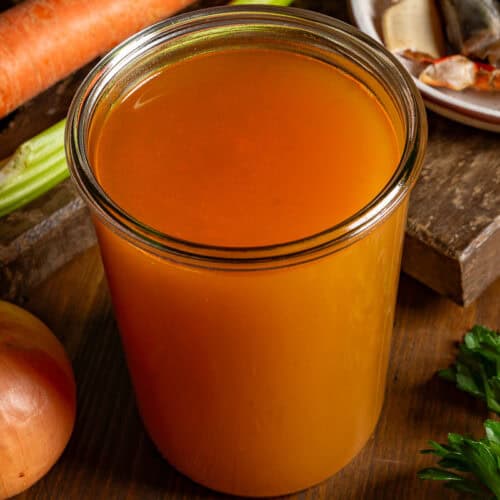
Seafood Stock is the key to adding deep, briny flavor to seafood soups, stews, and sauces. Made by simmering crab, shrimp, or lobster shells with aromatics, this homemade recipe is richer and more flavorful than any store bought version. Use it to level up your gumbo, bisque, or jambalaya, or go for Shrimp Stock instead for a single-flavor variation.
Homemade stock is one of the secrets in my guide to Louisiana pantry staples.

Seafood stock is the foundation of many classic Louisiana seafood dishes. It’s what gives seafood gumbo its depth, makes Crab and Corn Bisque taste so luxurious, and adds bold flavor to Seafood Jambalaya. Make it anytime you have leftover shells on hand, and freeze it for later. It also works in crawfish dishes like Crawfish Étouffée or Crawfish Cream Sauce. This all purpose seafood stock is a must have when making any seafood dish!
Why Do I Love This Recipe So Much?
Unlike chicken or beef, seafood cooks fast. You can simmer your chicken and sausage gumbo or braise beef for hours, infusing all the rich meaty flavor into your dish, but seafood would turn into a rubbery mess in that time. So how do you build that same deep rich flavor in your seafood dishes? Seafood stock! It’s quick to make, makes perfect use of otherwise wasted shells, and takes every seafood dish to the next level. I don’t make any seafood dishes without it.
Best Seafood for Stock
The type of seafood you use makes all the difference in your stock. Some shells create a clean, sweet flavor, while others can turn the pot cloudy or bitter. Here’s what to use, and what to avoid, when making homemade seafood stock.
Seafood to Use in Stock
- Shrimp shells and heads – add sweetness and a rich ocean flavor.
- Crab shells – give a deeper, slightly briny taste.
- Lobster shells – bring elegance and richness.
- Mild white fish bones/heads (snapper, cod, halibut, flounder) – add clean, delicate flavor.
- Crawfish shells – classic Louisiana choice, but don’t use them if they’ve been boiled in a very salty and spicy crawfish boil.
Seafood to Avoid in Stock
- Oily fish (salmon, mackerel, tuna, sardines, bluefish) – produce strong, overpowering, or bitter stock.
- Shellfish with dark gills or innards left in – can make the stock muddy or bitter (always clean first).
- Already cooked or seasoned shells (like fried or Cajun-boiled) – seasonings overpower the base making the final result too spicy or salty.
Ingredients & Substitutions
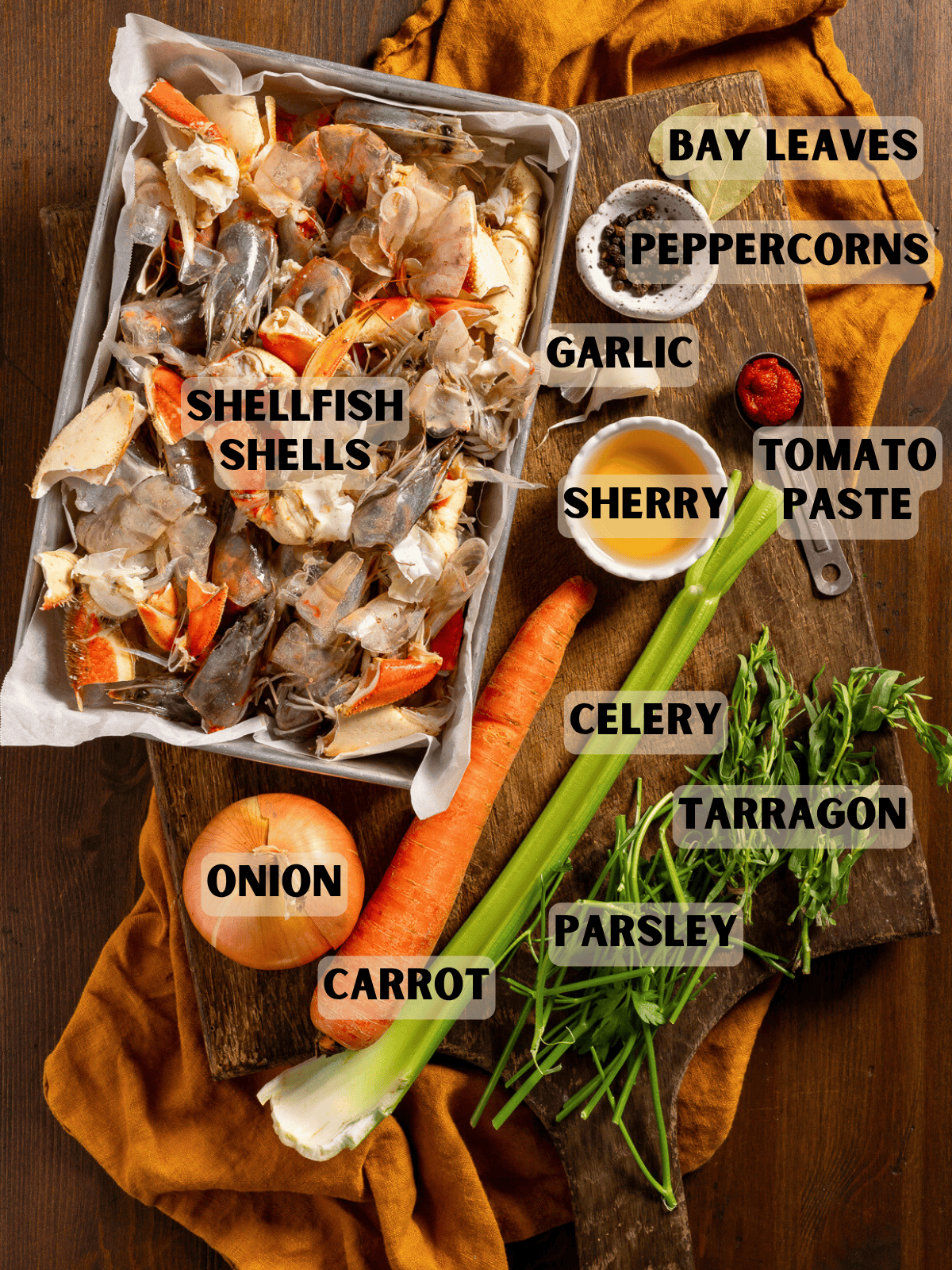
- Seafood shells – Use shrimp heads and shells, crab shells, and/or lobster shells. Each brings a different flavor profile. Avoid oily fish like salmon, which can turn stock bitter. Fish bones are fine if you have them. Only have shrimp shells? Make Shrimp Stock instead.
- Aromatics – Yellow or white onion, celery, carrot, and garlic. Rinse vegetables well, but no need to peel.
- Tomato paste – Just a bit helps caramelize and deepens the flavor.
- Cooking sherry – For deglazing and brightness. Substitute for dry white wine.
- Herbs – Fresh parsley and tarragon go well with seafood. Substitute for thyme. Bay leaves add an earthy note.
- Whole black peppercorns – Better than cracked pepper for clarity of the stock.
See the recipe card below for the complete list of ingredients and measurements.
How to Make Seafood Stock
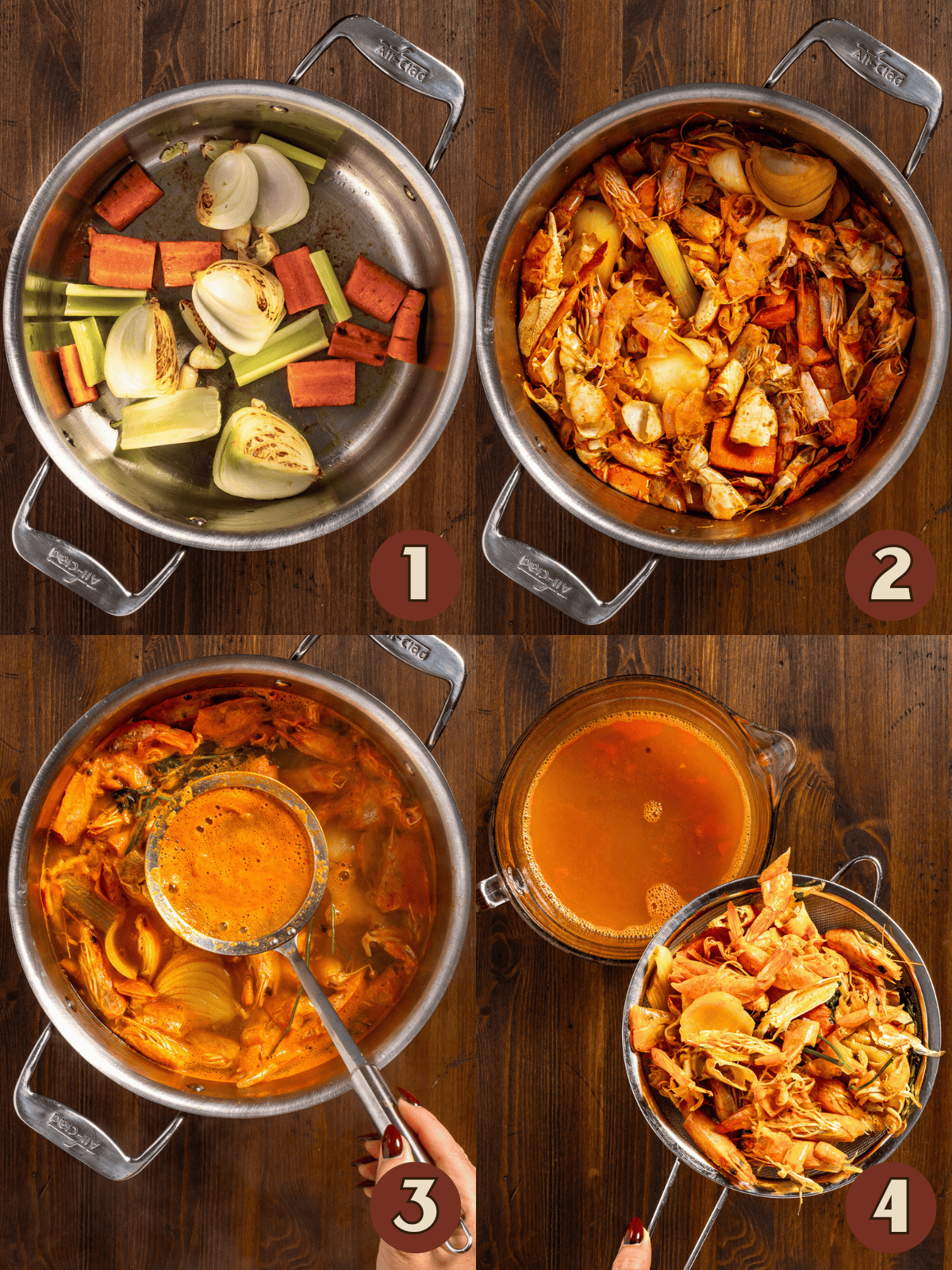
- SAUTÉ: Cook onion, carrot, celery, and garlic in olive oil for 5 minutes, stirring until browned. Add shells and cook 5 minutes more.
- CARAMELIZE and DEGLAZE: Stir in tomato paste and cook 1 minute until darkened. Deglaze with sherry, scraping up browned bits, and simmer 1–2 minutes.
- SIMMER: Add water, parsley stems, tarragon, bay leaves, and peppercorns. Bring to a gentle simmer and cook uncovered for 30 minutes, skimming foam as needed.
- STRAIN: Let cool slightly, then strain through a fine mesh sieve. Press on solids to release liquid. Cool fully before storing in smaller containers. Discard shells.

Lauren’s Tips
- Save your shells. I keep a bag in the freezer and add shrimp, crab, and lobster shells until I have enough to make stock. It’s like free flavor!
- Rinse shells. Rinse the shells well to get rid of any dirt or gunk that will cloud up your stock.
- Don’t over-simmer. Thirty minutes is plenty. Any longer and the stock can turn bitter or muddy.
- Mix and match shells. Shrimp shells make a sweeter stock, crab adds depth, and lobster brings richness. Use whatever you have on hand, or combine for layered flavor.
- Stay away from oily fish. Salmon, mackerel, or tuna bones will overpower the stock. Stick to shrimp, crab, lobster, crawfish, or mild white fish.
- Freeze smart. Pour cooled stock into freezer bags or ice cube trays. I like using 1 cup Souper Cubes so I have a pre-portioned out amount when I need it.


Storage & Make Ahead
- Refrigerator: Store cooled seafood stock in airtight containers or jars for up to 3 days. Always let it cool quickly before sealing.
- Freezer: For longer storage, freeze in quart containers, freezer bags, or even ice cube trays for smaller portions. It will keep for 3 months without losing much flavor.
- Make ahead: Stock can be made fully in advance and frozen until you need it. I like to portion it in 1–2 cup containers in Souper Cubes so I can grab just what I need for gumbo, bisque, or risotto.
- Thawing and reheating: Thaw overnight in the fridge, or place the container in warm water for a quicker defrost. Reheat gently on the stove but avoid boiling hard, which can dull the flavor.
Ways to Use Seafood Stock
Seafood stock is a versatile base that can transform simple dishes into restaurant-quality meals. Here are some of my favorite ways to use it:
- Gumbo. Seafood Gumbo gets its rich seafood flavor from a good stock.
- Soup and Bisques. Essential for recipes like Shrimp and Corn Bisque or Corn and Crab Bisque.
- Seafood sauces. A splash can boost flavor in Cajun cream sauces, gravies, or even pasta dishes like Cajun Salmon Alfredo.
- Étouffée. Use it in Crawfish Étouffée or Shrimp Étouffée to layer even more seafood flavor.
- Jambalaya. Cook Seafood Jambalaya in seafood for a richer base. The rice will soak up all the flavor.
- Rice and Risotto. It would work perfectly well with a seafood or lobster risotto.
Lagniappe
Lagniappe: LAN-yap – a little something extra
Louisiana is home to one of the most vibrant seafood industries in the country. From the Gulf to the bayous, fishermen harvest shrimp, crabs, crawfish, oysters, and fish that make their way into kitchens across America. It’s no accident that seafood gumbos and étouffées are so central to Louisiana cooking. Fresh seafood has always been at the heart of our food culture.
Using every part of the catch is part of that tradition. Shells that might otherwise be discarded get simmered into stocks and sauces, infusing dishes with the flavors of the Gulf. Making seafood stock at home isn’t just about taste, it’s a continuation of that Louisiana spirit of resourcefulness and respect for the harvest.
Did you love this recipe? Please leave a comment and let me know!
Seafood Stock Recipe
Ingredients
- 1½–2 pounds seafood shells (shrimp heads and shells, crab shells, and/or lobster shells, white fish bones)
- 1 medium onion
- 1 medium carrot
- 1 large celery stalk
- 2 cloves garlic
- 1 teaspoon extra virgin olive oil
- 1 teaspoon tomato paste
- 2 tablespoons cooking sherry
- 1 handful of parsley stems
- 2–3 sprigs fresh tarragon
- 2 bay leaves
- 1 teaspoon peppercorns
- 8–10 cups water
Instructions
- PREP: Rinse seafood shells and heads and drain well. Peel and quarter onion. Rinse carrot and celery, and cut into 2 inch chunks. Smash and peel garlic cloves. Remove stems from parsley.1½–2 pounds seafood shells, 1 medium onion, 1 medium carrot, 1 large celery stalk, 2 cloves garlic, 1 handful of parsley stems
- SAUTÉ: Heat a stock pot over medium heat and add olive oil. Sauté onion, carrot, celery, and garlic for about 5 minutes until veggies start to brown, stirring occasionally.1 teaspoon extra virgin olive oil
- ADD SHELLS: Add in shrimp shells and cook for about 5 minutes, stirring occasionally.
- CARAMELIZE: Make a well in the center of the pot and add in tomato paste. Gradually stir into the other ingredients and cook for about 1 minute until paste is darkening.1 teaspoon tomato paste
- DEGLAZE: Deglaze the pot with sherry and let simmer for 1–2 minutes to let alcohol burn off, scraping up any browned bits in the pot.2 tablespoons cooking sherry
- SIMMER: Add in parsley stems, tarragon, bay leaves, peppercorns, and enough water to cover the shells. Bring up to a gentle simmer, and cook on low uncovered for 30 minutes (no longer). Stir occasionally. Skim foam.2–3 sprigs fresh tarragon, 2 bay leaves, 1 teaspoon peppercorns, 8–10 cups water
- STRAIN: Remove from heat and cool slightly. Pour through a fine mesh strainer into a heat safe large measuring cup or container. Press down on ingredients in the strainer with a wooden spoon to extract all the liquid. Allow to cool before storing. Discard shells. Store in smaller containers to cool quicker.
Notes
- DO use shrimp heads and shells, crab shells, lobster shells, mild white fish bones, and crawfish shells. Raw shells are best.
- DO NOT use oily fish or shells that have been boiled in heavily seasoned water (will make the stock too salty/spicy).
- No need to peel vegetables, but do rinse well.
- Substitute sherry for dry white wine
- Substitute tarragon for thyme.
- Yield: 6-8 cups stock.
- Storage: Keep in the fridge up to 3 days or freeze up to 3 months in freezer safe containers. Thaw overnight or in warm water, then reheat gently.
Equipment
- Stock pot or dutch oven
- Fine mesh strainer
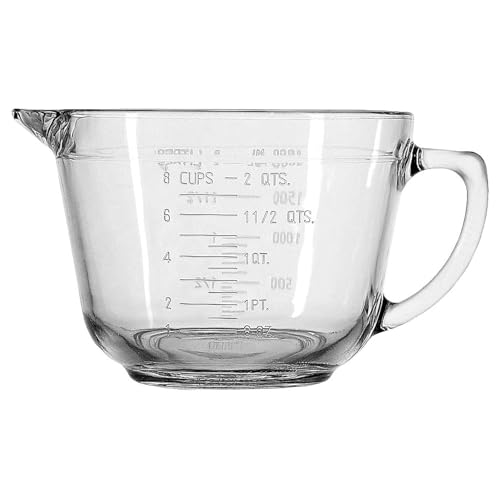
- Large 8 cup measuring cup
Nutrition
Frequently Asked Questions
Yes. Rinsing removes sand, grit, and surface proteins that can cloud the stock. It also keeps the flavor clean, especially if the shells were frozen.
Yes! I keep a bag in the freezer and add shrimp, crab, or lobster shells until I have enough. Frozen shells work just as well as fresh, but give them a quick rinse before using to keep the stock clean and clear.
You can, but even after rinsing very well, the shells will carry seasoning and salt from the boil. That can make your stock taste muddy or overly spiced. For a neutral, all-purpose seafood stock, raw shells are best.
Cloudy stock usually comes from boiling too hard or not skimming foam as it cooks. Keep the pot at a gentle simmer and skim the surface occasionally for the clearest result.
Overcooking the shells or using oily fish like salmon, mackerel, or tuna can lead to bitterness. Stick with shrimp, crab, lobster, crawfish, or mild white fish bones and simmer no longer than 30–45 minutes.
In the refrigerator, about 3 days. For longer storage, freeze in containers or bags for up to 3 months.
If you don’t have seafood stock, chicken stock is the closest substitute in Cajun and Creole recipes. It won’t add the same briny depth, but it will still give body to the dish. Shrimp stock works perfectly well too.

Meet Lauren
I’m the blogger, recipe developer, food photographer, and otherwise food obsessed gal behind Lauren From Scratch. I was born and raised in New Orleans and lived in South Louisiana most of my life. Growing up around Cajun country has instilled a love of food that runs deep in my bones. I am passionate about food and teaching you how to make mouth-watering Louisiana inspired dishes in your own kitchen — and most recently, on Food Network’s 100 Cooks!
where y’at?
Let’s get social, cher! Come hang out with me and get a little peek into the life of a food blogger.