
Turkey Stock From the Carcass (Stovetop or Slow Cooker)
This homemade turkey stock works with whatever turkey you’ve got: the leftover carcass after Thanksgiving, or the raw neck, backbone, heart, and gizzard before the bird ever goes in the oven. It’s aromatics and fresh herbs, simmered for 4 to 6 hours on the stovetop or 8 to 12 hours in a slow cooker, and it makes about 2 quarts.
I tested it a few different ways, so you can make it with whatever parts you have and get the flavor you’re after. And there’s one thing I leave out on purpose: salt.
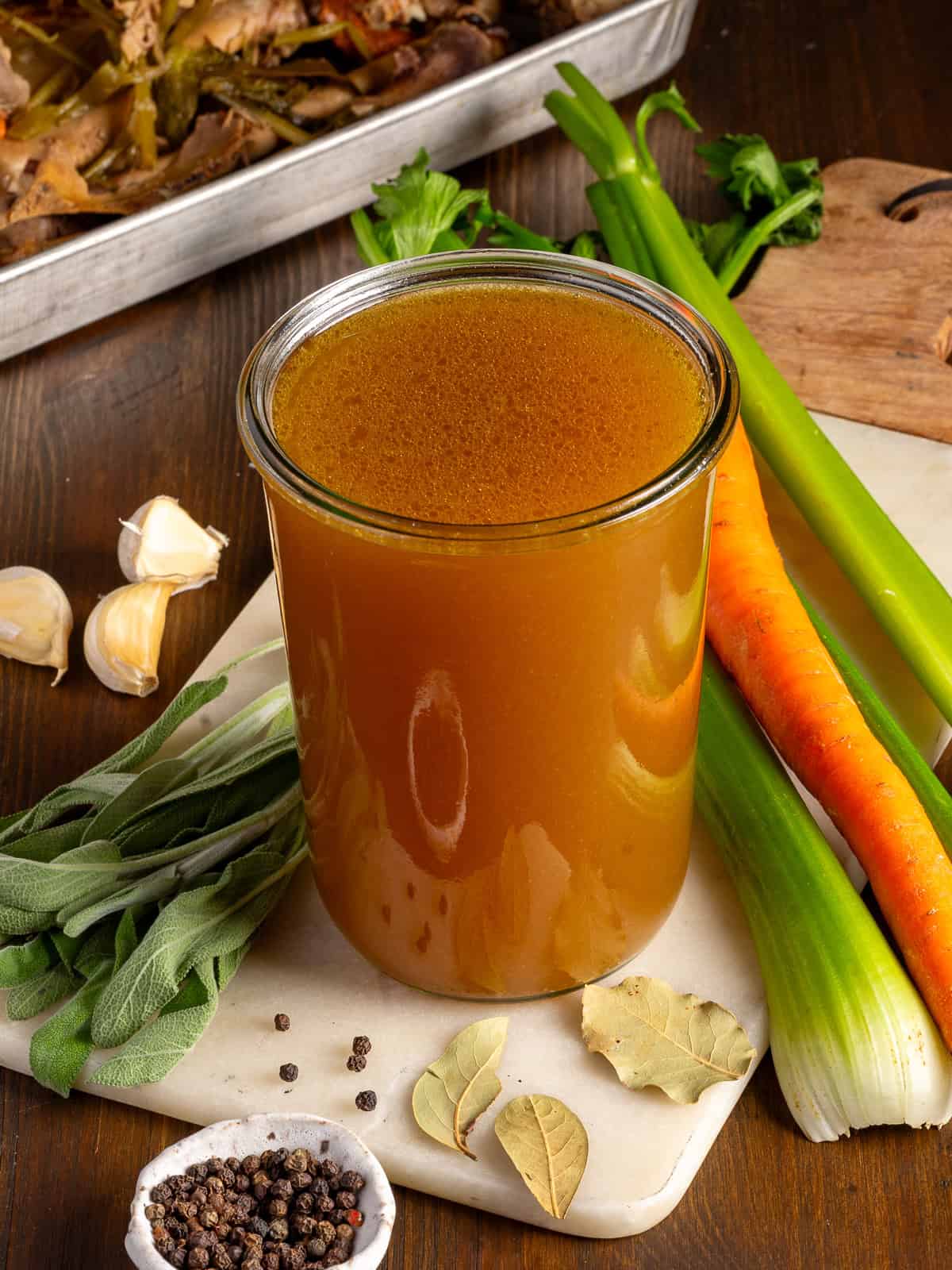
Carcass, Neck and Backbone, or Both
You can make this stock with the leftover turkey carcass, the raw neck and backbone, or both. When you make it depends on what you need it for and when you’re making it.
- Before Thanksgiving: neck, backbone, heart, and gizzard for gravy. The neck comes packed inside the turkey, and the backbone is what you cut out to spatchcock it. Make the stock ahead of time, and it’s ready for gravy while the turkey roasts. Used raw, they make a lighter stock. Roast the neck and backbone first if you want it deeper and darker.
- After Thanksgiving: the carcass for gumbo. Once the turkey is picked over, the carcass goes straight into the pot. It’s already roasted, so there’s nothing extra to do. That’s the stock for turkey gumbo or soup.
- Both. You can use the carcass and the neck and backbone together. The carcass is already roasted, so roasting the other pieces is optional. When I used the carcass with roasted pieces, the stock came out a rich brown.
Why There’s No Salt in This Stock
The first time I tested this stock, the note I wrote in all caps was: DON’T SALT. The turkey is already salted, and that includes the skin on the carcass. If you made my Cajun spatchcock turkey, that bird was dry-brined in ⅓ cup of kosher salt, and plenty of that ends up in the stock.
Unsalted stock also gives you control later. Stock reduces in gravy and simmers down in gumbo, and the salt concentrates as it does. Season the dish you use it in instead. My Cajun gravy with or without turkey drippings is a good place to start.
Lagniappe: Nothing Goes to Waste
Lagniappe: LAN-yap – a little something extra
There’s nothing especially Cajun about turkey stock. The habit behind it is, though. Using every part of the animal runs deep in South Louisiana cooking. It goes back to the boucherie, the communal hog butchering where families turned every part of the pig into something: boudin, cracklins, hogshead cheese. The same thinking is why Louisiana dirty rice gets its color and flavor from chicken livers, and why the turkey carcass becomes leftover turkey gumbo instead of trash.
Ingredients & Substitutions
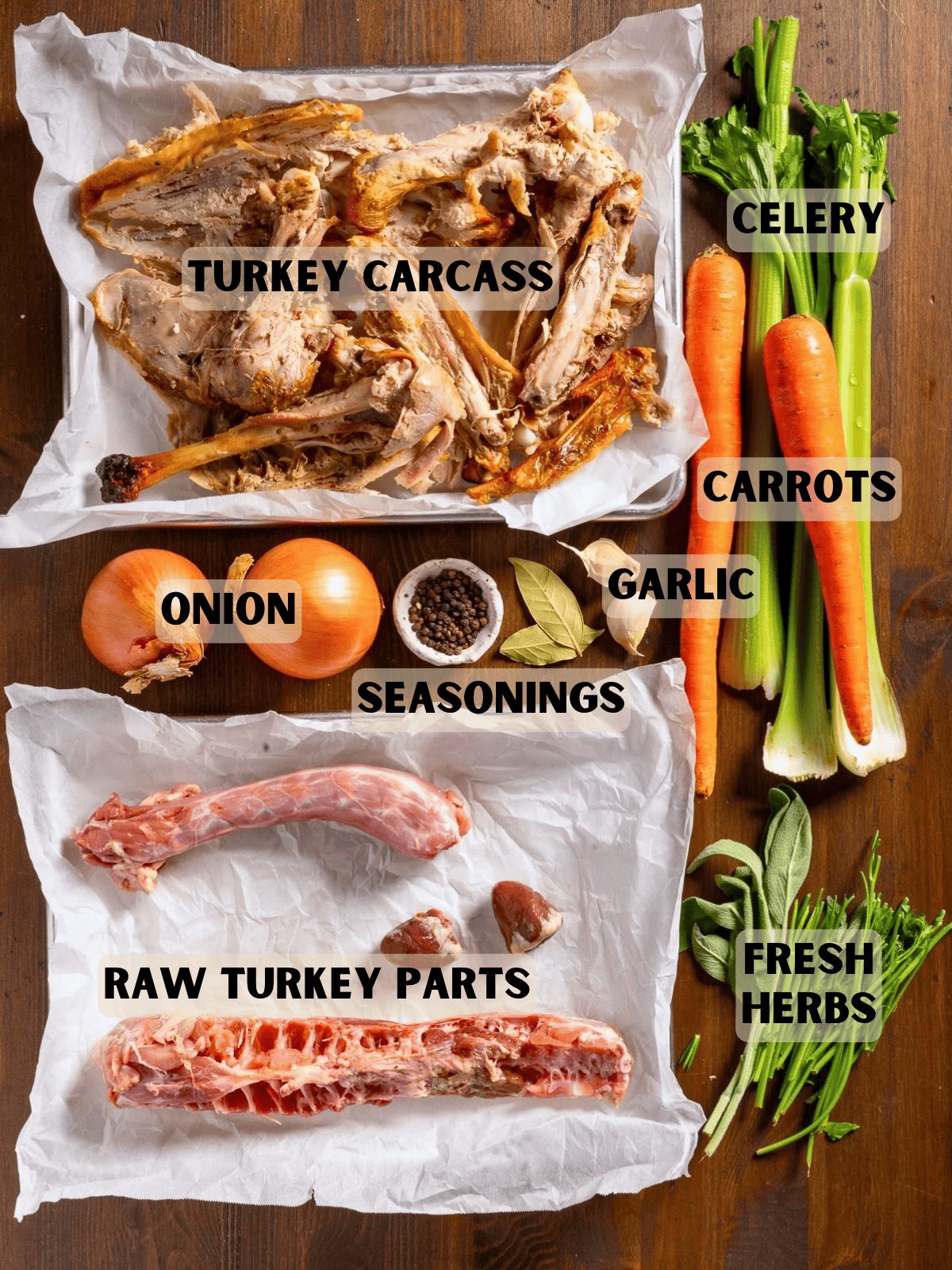
- Turkey carcass: Pick off any meat that’s left and save it for another meal. Then break the carcass into pieces that fit in your pot. It’s already roasted, so it goes straight in. Leave on whatever skin is stuck to the carcass, but don’t add the loose pile of skin from the platter, especially from a heavily seasoned bird. That skin carries most of the salt and seasoning.
- Neck, backbone, and giblets: The giblets come packed inside the turkey along with the neck. Use the heart and gizzard, but leave out the liver, because it makes the stock bitter. Save the liver for making dirty rice.
- Vegetables: Wash them, but don’t bother peeling them. Quarter the onions and cut the carrots and celery into big 2-inch pieces, since everything gets strained out at the end anyway.
- Herbs: Use parsley stems and any leftover tender herbs you had from Thanksgiving.
See the recipe card below for the complete list of ingredients and measurements.
How to Make Turkey Stock
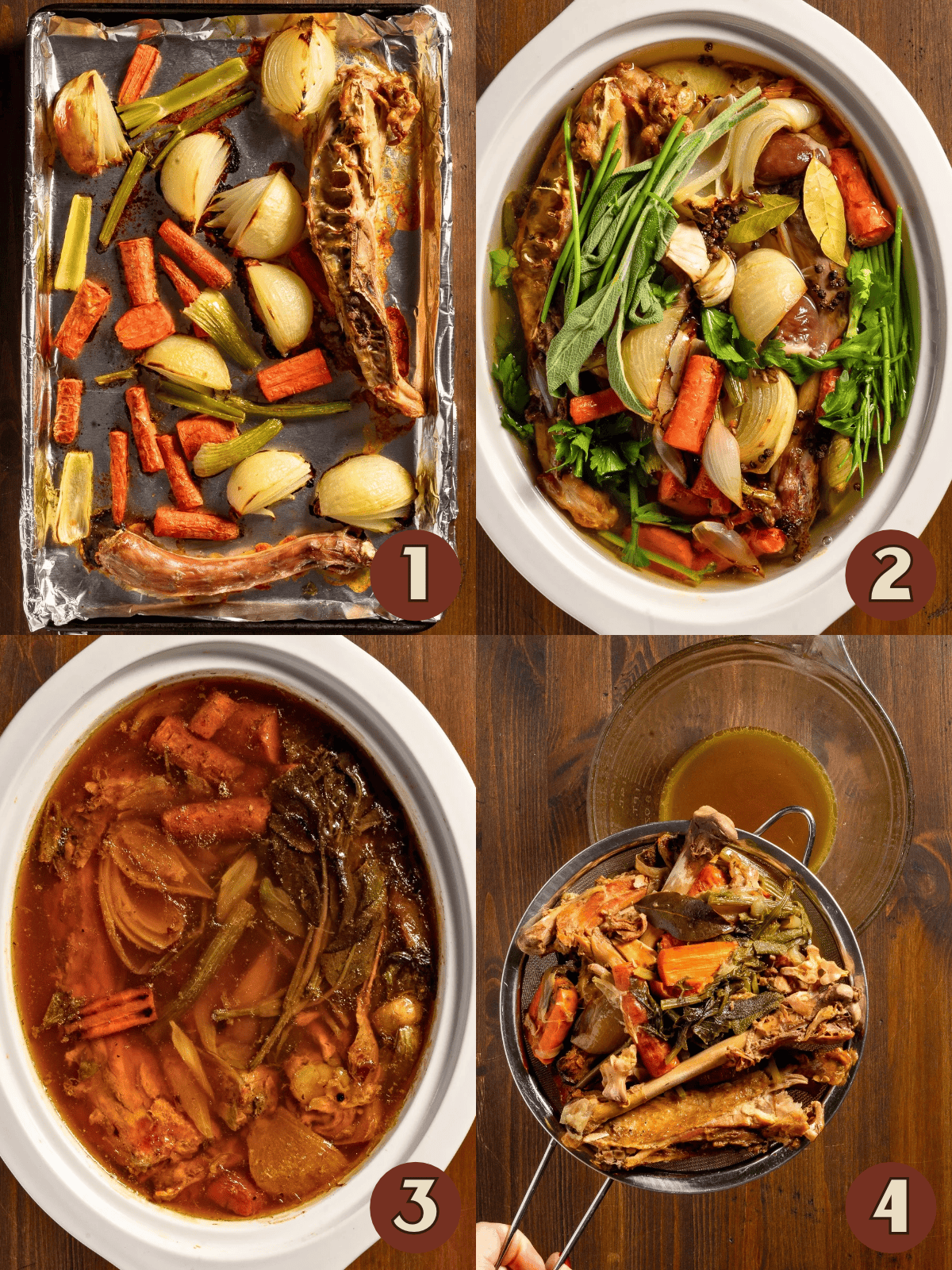
- Roast the neck, backbone, and vegetables until golden brown.
- Add everything to the slow cooker or pot with just enough water to cover.
- After 8 to 12 hours on low in the slow cooker, or 4 to 6 hours on the stove, the stock is a rich brown and ready to strain.
- Lift out the large pieces with tongs, then pour the stock through a fine-mesh strainer.
Lauren’s Tips
- Don’t leave the browned bits behind. After roasting, add a splash of water to the baking sheet and scrape it clean into the pot. The browned bits on the pan are a big part of what makes the roasted version deeper.
- Keep everything just covered. On the stovetop, the water drops as the stock simmers uncovered for hours. Add a little more as you go, so the turkey and vegetables stay just under the surface.
- Spare the salt. Leave on whatever skin is stuck to the carcass, but don’t add the loose pile of skin from the platter, especially from a heavily seasoned bird. That skin carries most of the salt and seasoning.
Made this recipe? I’d love to hear how it turned out! Leave a comment and a star rating below.
Turkey Stock From the Carcass (Stovetop or Slow Cooker)
Ingredients
- 2 medium yellow onions
- 2 medium carrots
- 3 celery ribs
- 2 garlic cloves
- 1 leftover roasted turkey carcass and/or 1 raw turkey neck, backbone, heart, and gizzard
- 1 tablespoon neutral oil (optional)
- 2 bay leaves
- A few sprigs fresh herbs (such as flat-leaf parsley, sage, thyme, or tarragon)
- 1 teaspoon whole black peppercorns
- 8–10 cups water (or enough to cover)
Instructions
- PREP: If roasting, preheat the oven to 425°F with a rack in the center and line a rimmed baking sheet with foil. Wash vegetables; no need to peel. Quarter onions. Cut carrots and celery into 2-inch pieces. Smash garlic. If using a carcass, remove any remaining meat and break the carcass into pieces that fit in the pot.2 medium yellow onions, 2 medium carrots, 3 celery ribs, 2 garlic cloves, 1 leftover roasted turkey carcass and/or 1 raw turkey neck, backbone, heart, and gizzard
- ROAST (optional, for a raw neck and backbone): Toss neck, backbone, onions, carrots, and celery with oil and spread in an even layer on the baking sheet. Roast for 35 to 45 minutes, until golden brown. Transfer everything to a large stockpot or 6-quart slow cooker.1 tablespoon neutral oil
- DEGLAZE: Add a splash of water to the baking sheet, scrape up the browned bits, and pour the liquid into the pot.
- SIMMER (stovetop): Add remaining ingredients to a large stockpot with enough water to cover. Bring to a simmer over medium-high heat, then reduce heat to low. Simmer uncovered for 4 to 6 hours, skimming foam occasionally. Add water as needed to keep everything just covered.2 bay leaves, A few sprigs fresh herbs, 1 teaspoon whole black peppercorns, 8–10 cups water
- SLOW COOK (slow cooker): Or, add remaining ingredients to a 6-quart slow cooker with enough water to cover. Cook covered on low for 8 to 12 hours or on high for 6 to 8 hours.
- STRAIN: Let stock cool slightly. Use tongs to transfer large pieces to a colander set over a large bowl to drain. Pour the remaining stock through a fine-mesh strainer into the bowl.
- USE: Use in soup, gumbo, or gravy, or cool completely and store.
Notes
- Raw or roasted: Raw neck, backbone, and giblets make a lighter stock. Roasting the neck and backbone first makes a deeper, darker stock. If you’re using a roasted carcass, there’s no need to roast the neck and backbone too.
- Giblets: Use the heart and gizzard, but leave out the liver; it makes the stock bitter. Add the giblets raw; don’t roast them.
- Salt: Don’t add salt. The turkey and its skin are usually already salted, so season the dish you use the stock in instead. Leave on whatever skin is stuck to the carcass, but don’t add the loose pile of skin from the platter, especially from a heavily seasoned bird.
- Water: 8 to 10 cups covers the neck, backbone, and giblets in a 6-quart slow cooker. A whole carcass in a stockpot will need more, so add enough to keep everything just covered.
- Storage: Refrigerate up to 4 days or freeze up to 6 months.
Equipment
- 6-quart slow cooker or large stockpot
- Fine mesh strainer
Nutrition
Meet Lauren
I’m the blogger, recipe developer, food photographer, and otherwise food obsessed gal behind Lauren From Scratch. I was born and raised in New Orleans and lived in South Louisiana most of my life. Growing up around Cajun country has instilled a love of food that runs deep in my bones. I am passionate about food and teaching you how to make mouth-watering Louisiana inspired dishes in your own kitchen — and most recently, on Food Network’s 100 Cooks!
where y’at?
Let’s get social, cher! Come hang out with me and get a little peek into the life of a food blogger.