
Cajun Spatchcock Turkey
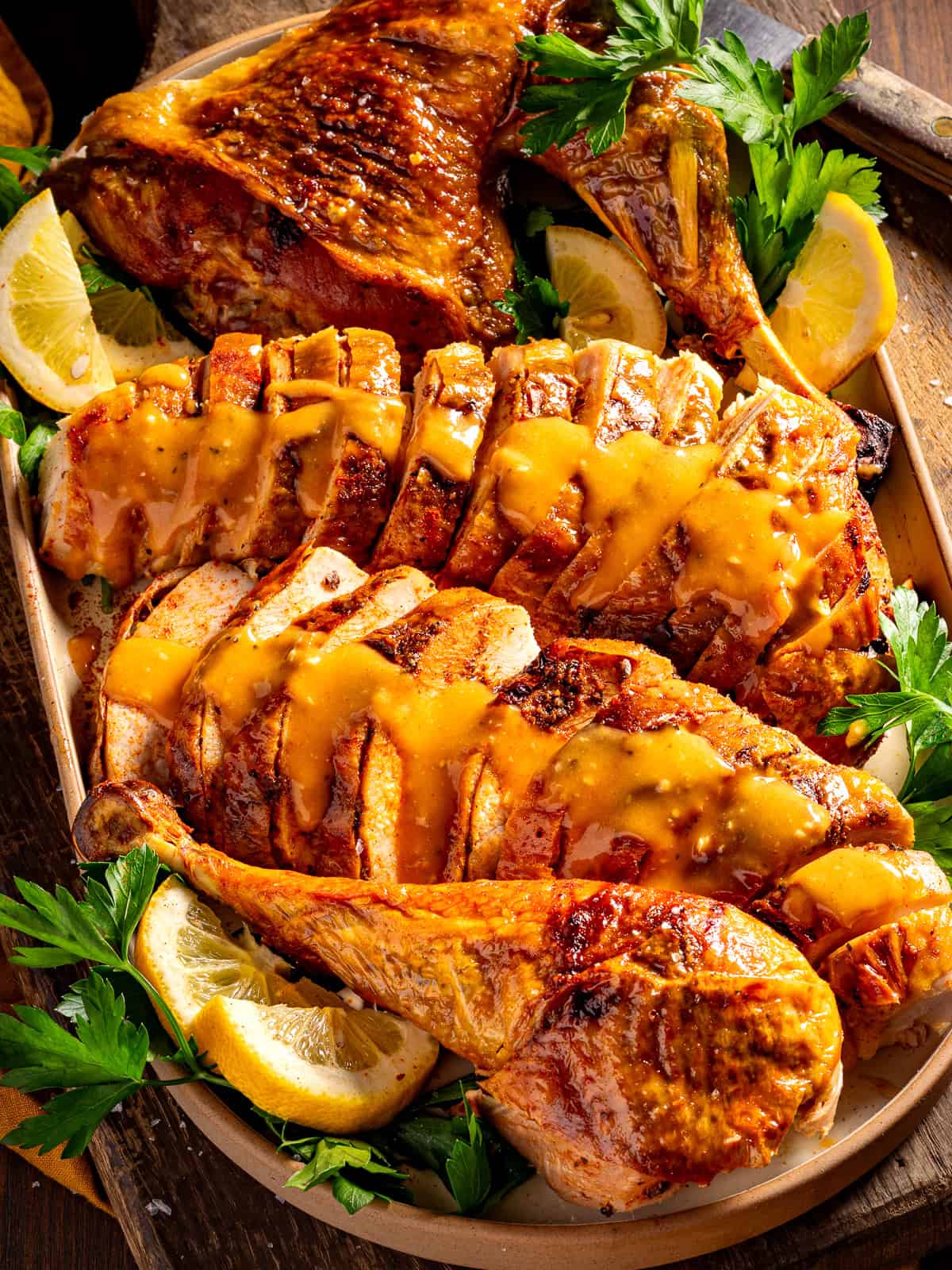
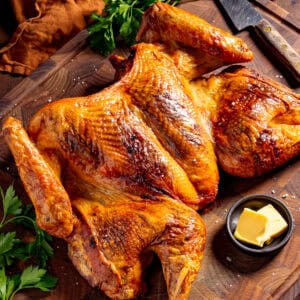
This Cajun Spatchcock Turkey is juicy, boldly seasoned with cajun butter, and cooks in about half the time as a traditionally roasted whole bird! I’ll show you exactly how to spatchcock, dry brine, and roast your turkey to perfection so the meat stays tender and the skin becomes crisp and golden. Plus how to make a flavorful Cajun Gravy to top it off.
Why Do I Love this Recipe So Much?
During the cooking chaos of Thanksgiving, it seems like everything needs a turn in the oven. A traditional whole turkey can take up to five hours, holding up the rest of the meal. Spatchcocking cuts that time in half and cooks the turkey evenly so the breast and thighs stay tender and juicy. It’s my favorite way to roast a whole bird.
Ingredients & Substitutions
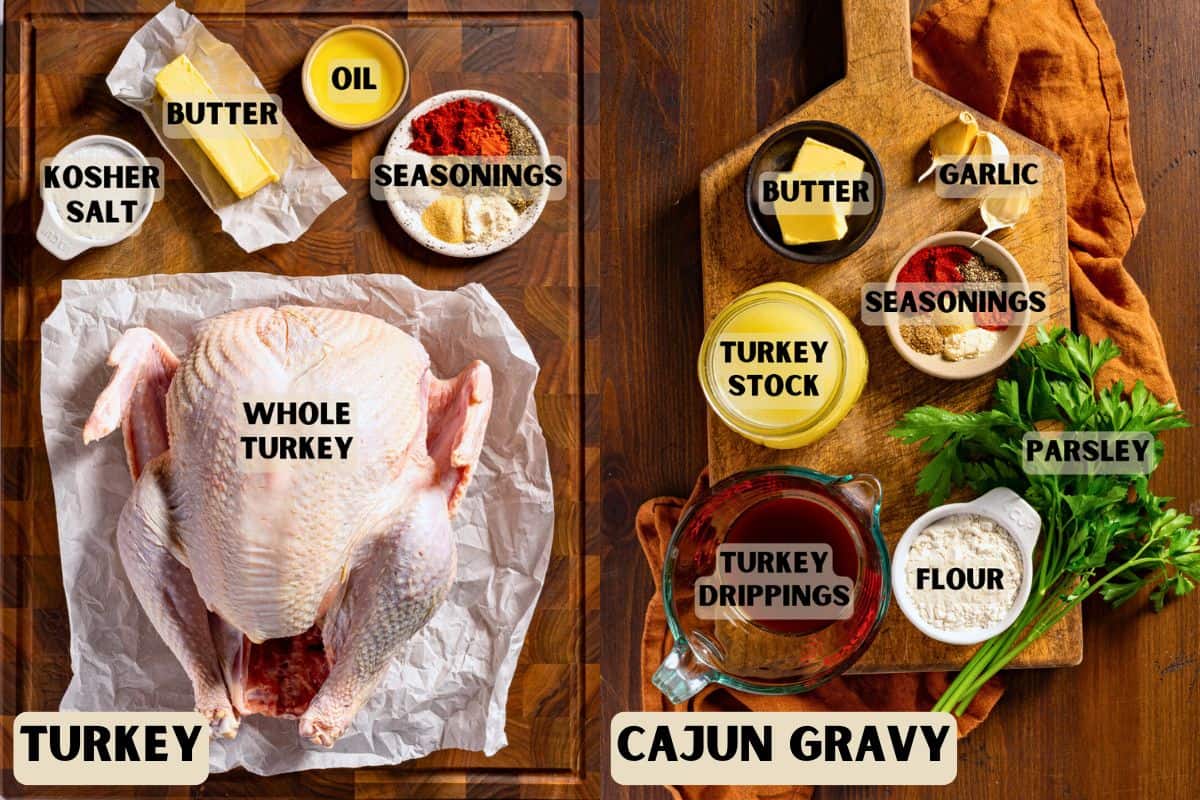
- Whole turkey – This recipe works well for a 12–14 pound turkey, which feeds about 8–14 people, depending on if you want leftovers. (Use your leftover turkey to make Turkey Gumbo!). Don’t forget to allow the proper time for defrosting!
- Kosher salt – This type of salt is my favorite to use and is perfect for dry brining. Don’t swap for table salt, it’s too fine and will make the turkey too salty. If you must use table salt, use half the amount.
- Butter – Use unsalted butter for the turkey and gravy since you’ll be adding salt to the cajun butter and turkey.
- Dry seasonings – Make your own cajun seasoning blend with garlic powder, onion powder, black pepper, cayenne pepper, smoked paprika, celery salt, and dried herbs. I don’t recommend using store bought cajun seasoning as it will be too salty.
- Stock – Homemade stock will take your Thanksgiving meal (or any meal) to the next level, trust me! It’s worth the time. You can use chicken stock or turkey stock.
- Fresh herbs – I use a little chopped parsley for the gravy garnish, but if you want to go traditional Thanksgiving flavor, opt for sage and thyme.
See the recipe card below for the complete list of ingredients and measurements.
Defrosting A Turkey
The biggest mistake you can make for Thanksgiving is forgetting to defrost the turkey! It will need days in the refrigerator to defrost, so make sure you leave yourself enough time!
While you can defrost a turkey in ice cold water that you change out every 30 minutes, that can be time consuming and messy. My preferred (and safest) method to defrost a turkey is in the refrigerator.
How to Defrost a Turkey in the Refrigerator
- Leave it in the original packaging.
- Place the turkey on a large baking sheet.
- Put it on the lowest rack of your refrigerator to prevent cross contamination.
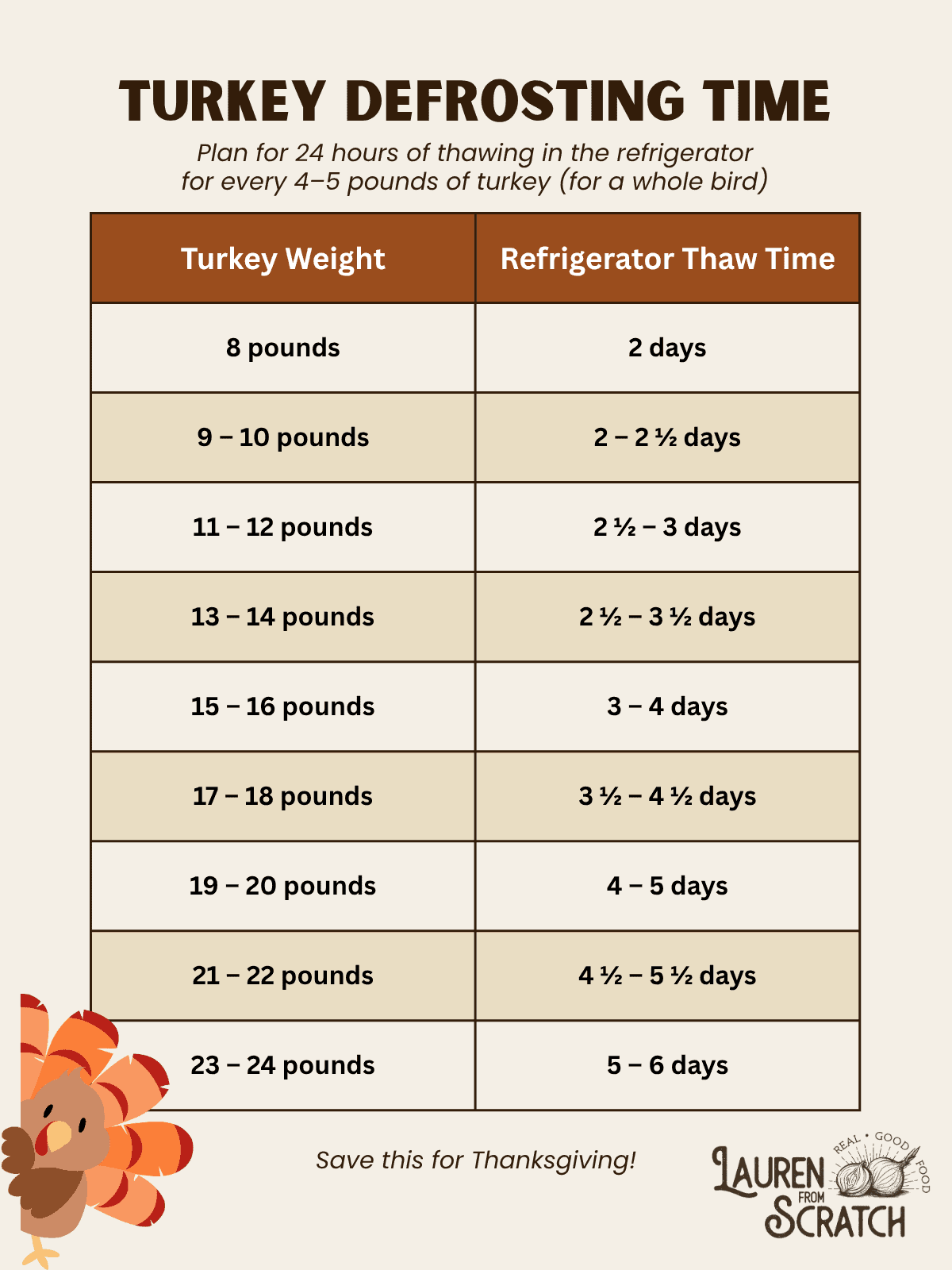
- Allow 24 hours for every 4–5 pounds of turkey to defrost.
See the turkey defrosting chart below to figure out how many days you will need. If you are dry brining your turkey, you will need another 1–2 days for the dry brine before cooking.
How to Spatchcock a Turkey
Once your turkey is thawed, it’s time to spatchcock it! Spatchcocking might sound fancy, but it’s one of the easiest ways to guarantee a juicy, evenly roasted turkey. By removing the backbone and flattening the bird, you expose more skin and meat to the heat, which means faster cooking, crispier skin, and tender meat from breast to leg.
What Does Spatchcock Mean?
Spatchcocking, also called butterflying, means removing the backbone of a poultry bird so it can be opened up and laid flat for roasting. This method works great for turkey and chicken too. This technique allows the turkey to lay flat on a baking sheet so it can cook more evenly and quickly. It means you won’t dry out the breast meat while waiting for the thighs to cook.
Why You Should Spatchcock Your Turkey
Flattening the turkey out exposes more surface area to the oven’s heat, which means:
- The turkey cooks in about half the time as a traditionally roasted bird.
- The skin browns evenly, getting more crispy bites.
- The meat stays juicy because breasts and thighs are cooking evenly.
- It’s easier to carve, season, and fit into the oven.
Step-by-Step: How to Do It
You’ll need a pair of heavy duty, sharp kitchen scissors. I use these poultry shears and they work great. You will also need a large baking sheet with a wire rack, and lots of paper towels. Once your bird is fully thawed, you’re ready to spatchcock. Just remove all the giblets in the center cavity first.
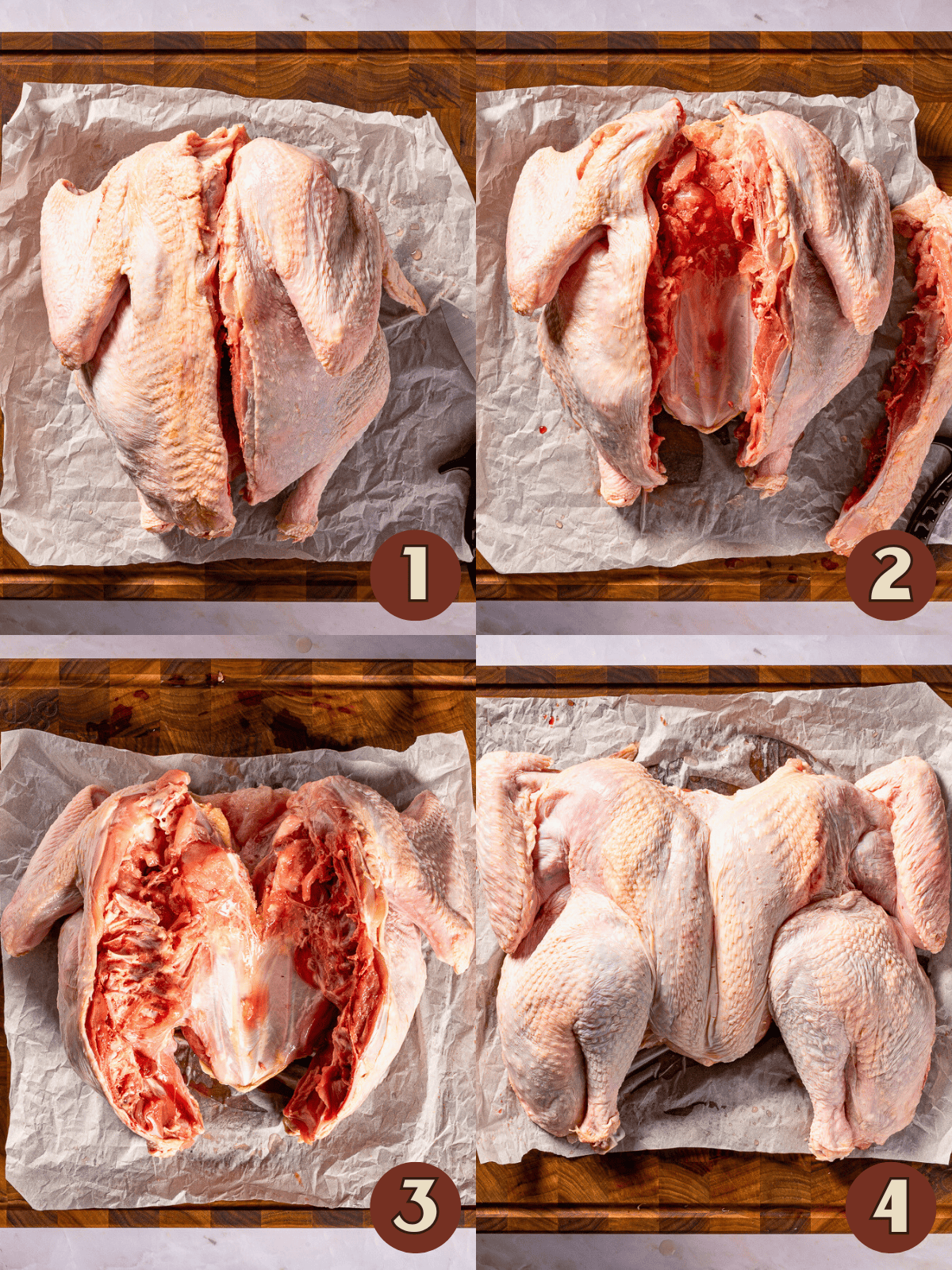
- Place the turkey breast down on a large cutting board. Using heavy duty poultry shears, cut along one side of the backbone, from the lower cavity all the way up to the neck.
- Next repeat on the other side of the backbone, removing it completely (save the backbone to make stock.)
- Locate the breastbone and make a cut down the middle a few inches long (don’t cut through the skin). This helps the bird to lay flat.
- Flip the turkey over breast side up and flatten the sides out, turning the thighs towards each other. The turkey should lie flat. Push down on the breast bone if needed to flatten. Trim any excess skin. Pat down dry with paper towels. Transfer to the prepared rack and baking sheet.
Next you can prepare for cooking, but I highly recommend dry brining the turkey first!
How to Dry Brine a Turkey
Dry brining is by favorite way to “marinate” a turkey because it keeps the meat juicy, seasons all the way through, and gives you the most crispy skin. Plus, it’s way less messy than a liquid brine method – no ice chests full of raw turkey water that you have to tend to and keep ice cold.
What is a Dry Brine?
A dry brine is a simple mix of salt and spices rubbed directly on the turkey and left to rest in the refrigerator. The salt pulls moisture out of the surface first, then the salty liquid gets absorbed back into the turkey, bringing the flavor and seasoning back into the meat. The skin surface gets dried out in the refrigerator so it can get extra crispy while roasting.
Why Dry Brine a Turkey?
Dry brining does three important things:
- Juicer meat: the salt helps the muscle fibers hold onto moisture during roasting.
- Deeper flavor: The seasoning works its way into the meat instead of sitting on the surface.
- Crispier skin: The circulating air in the refrigerator dries out the skin so it browns and crisps perfectly in the oven.
It’s a simple upgrade you can do to guarantee a flavorful cajun turkey. If you spatchcock your turkey first, it will be easier to store in the refrigerator.
Step-by-Step: How to Do It
For this cajun turkey recipe, I use kosher salt only for the dry brine, but you can add any dry seasonings you’d like. It’s important to use kosher salt when dry brining – not table salt.
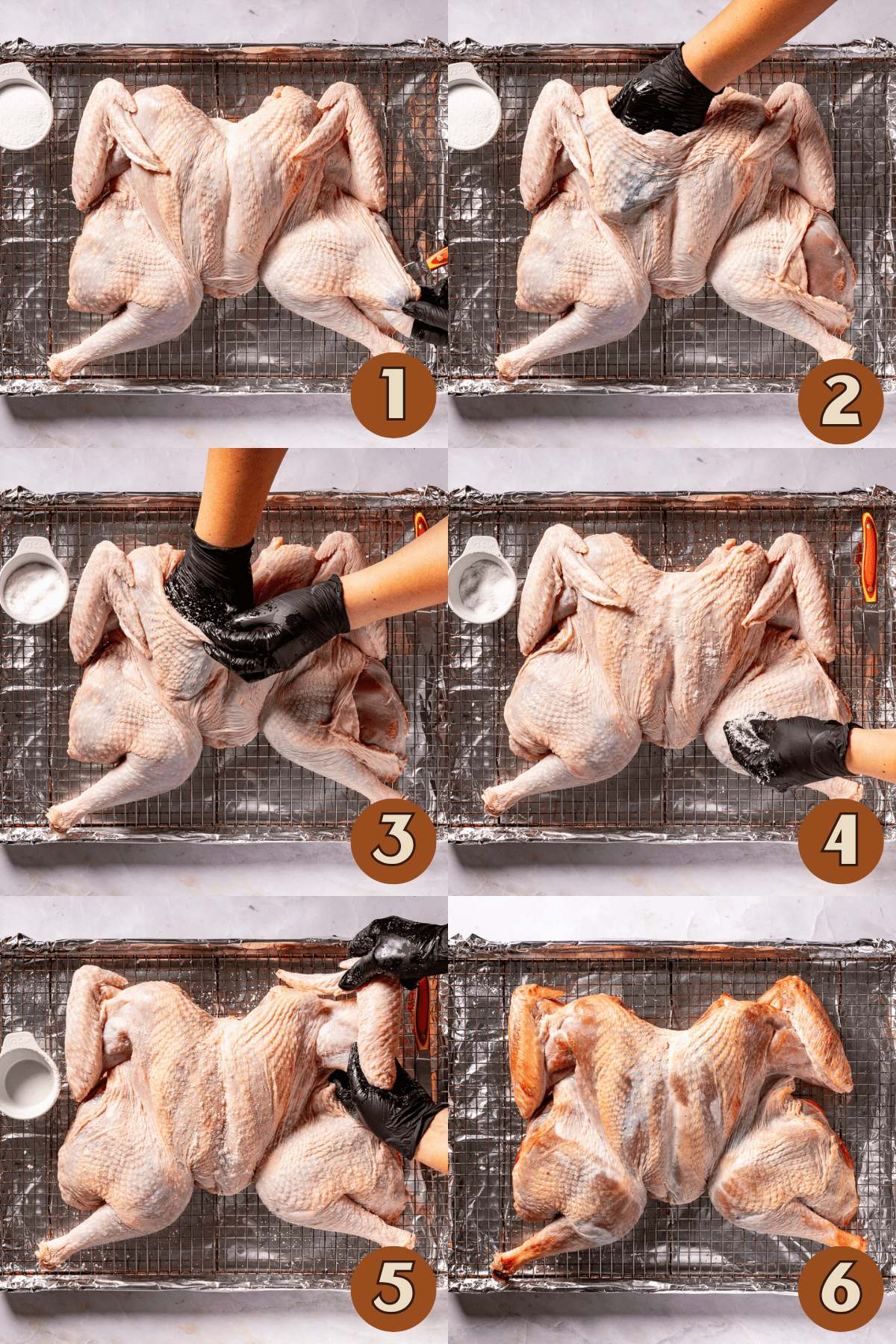
- Place the spatchcocked turkey on a large baking sheet with a wire rack, and pat the turkey down very well with paper towels.
- Gently lift the skin away from the meat around the breasts and legs. You might need to use a paring knife to lift the skin around the edges.
- Generously coat the turkey under the skin with kosher salt.
- Top the skin evenly with kosher salt as well.
- Tuck the wings under the breasts, and slide a few paper towels under the baking rack to catch any drips.
- Refrigerate uncovered for 24–48 hours.
When it’s done, don’t rinse the turkey, just brush off any extra salt. The skin will look dry, and that’s exactly what you want! It means the skin will get crispy in the oven.
How to Make Cajun Turkey
Once your bird is spatchcocked and dry brined, time to roast it!
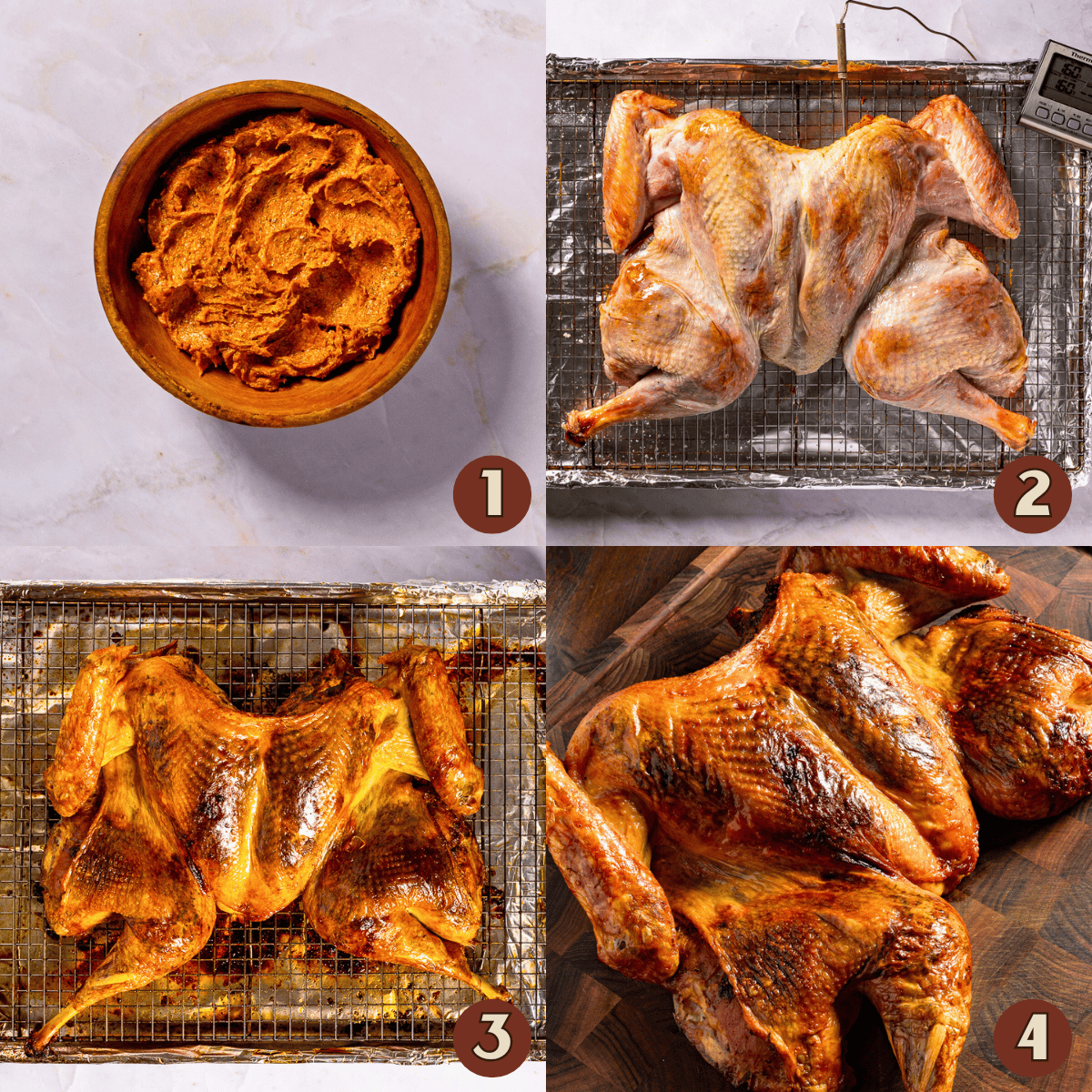
- MIX: Mix softened butter with dry seasonings.
- RUB: Rub the compound butter under the skin evenly. Brush skin with neutral oil and tuck in the wings.
- ROAST: Roast for 6–7 min per pound at 425°F. After about 30 minutes, loosely tent with foil. Roast until the internal temperature reaches 155–160°F. (The turkey will rise to 165°F as it rests.)
- REST: Rest for about 20 minutes before carving with loosely tented foil.
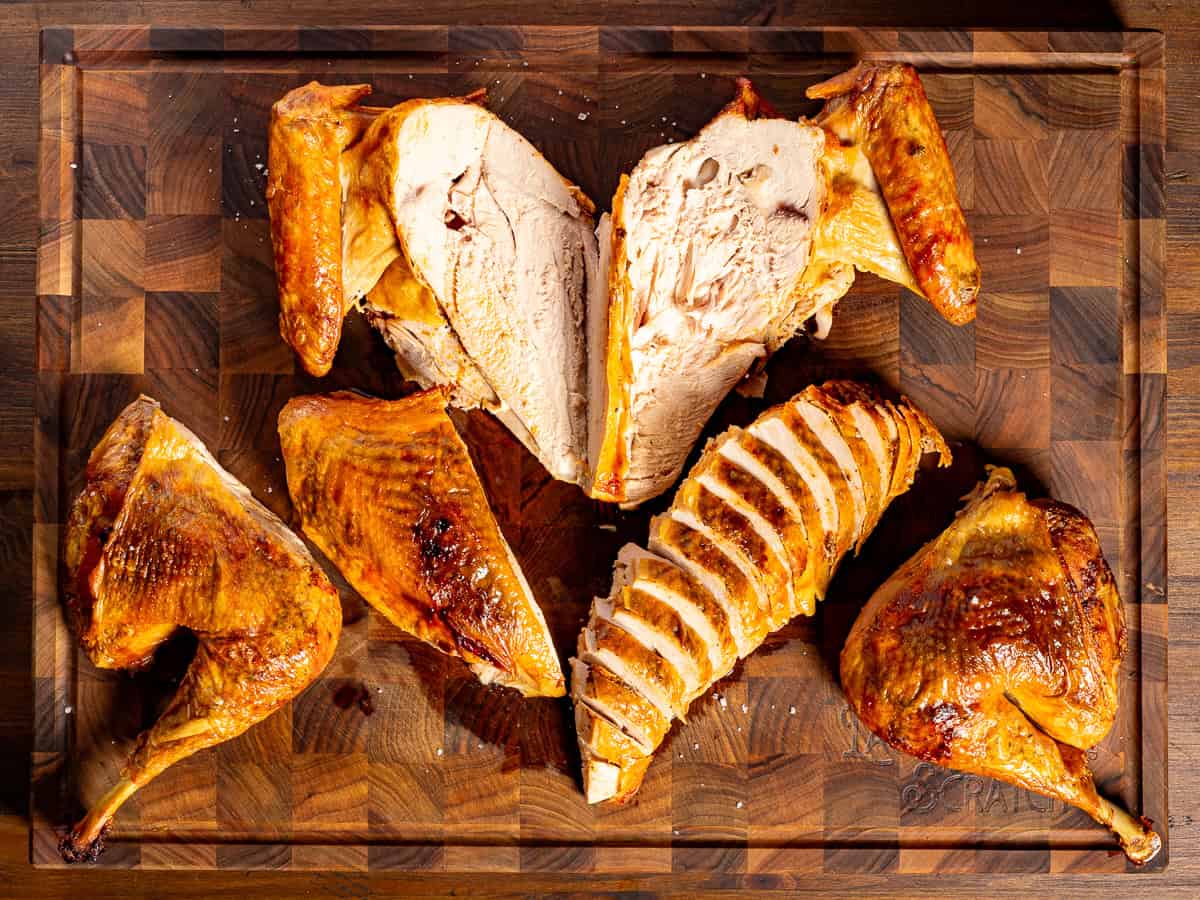
- CARVE: Remove the leg and thighs. Cut down and away from either side of the breastbone to remove the breast, then slice against the grain.
While the turkey is resting, make the gravy: Whisk flour into strained turkey drippings. Cook while stirring for 4–5 minutes until flour is slightly darkened, then mix in garlic. Slowly whisk in warmed stock until smooth. Simmer until thickened. Add dry seasonings, and finish with 1–2 tablespoons of butter and chopped parsley. Taste and adjust seasonings as necessary.

Lauren’s Tips
- Plan for thawing! A 20 pound turkey needs up to 5 days in the refrigerator to defrost! Make sure you get your turkey and calculate how long you will need for thawing time (24 hours in the refrigerator for every 4–5 pounds of turkey).
- Don’t skip the dry brine. Dry brining will keep the turkey juicy and is essential for crispy skin. Make sure to dry brine the turkey uncovered in the fridge for at least 24 hours.
- Make your own stock. Save the backbone for making homemade turkey stock. It’s as easy as throwing the ingredients in a slow cooker, and takes your gravy and sides to the next level.
- Butter under the skin, oil over. Coating the outside of the turkey with butter can burn the milk solids. Instead, rub the butter under the skin, then coat the outside of the skin with oil.
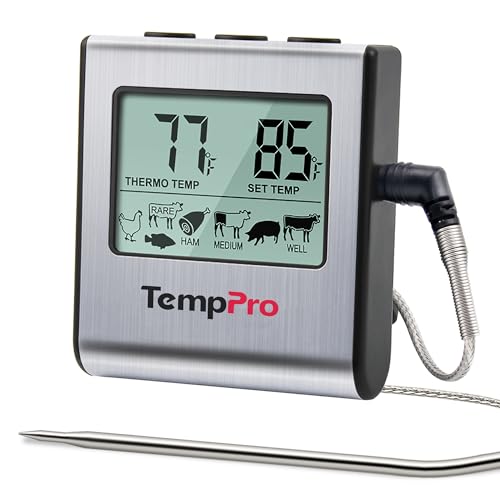
- Use a leave-in thermometer. This is my number one tip for juicy chicken and poultry. An overcooked bird is almost always dry. Cooking with a leave-in thermometer will tell you exactly when it’s time to pull it from the oven.
Equipment Needed
 Buy Now →
 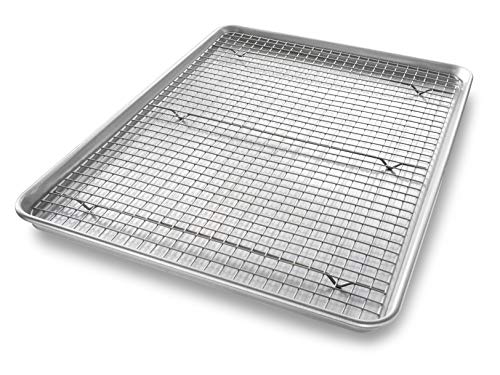 Buy Now →
  Buy Now →
 Storage & Make Ahead
- Refrigerate: Store leftover turkey in the refrigerator for 3–4 days. Remove the meat from the bone before storing.
- Freeze: Add turkey to freezer bags and remove as much air as possible. Freeze for 3–6 months.
- Reheat: For the juiciest results, reheat the turkey gently in a covered skillet with a splash of turkey stock, or warm covered in a 300°F oven until heated through. Avoid microwaving large pieces, it dries them out fast.
- Make Ahead: You can spatchcock and dry brine the turkey 1–2 days ahead of time. Store it uncovered in the refrigerator until you are ready to cook.
What to Serve With Cajun Turkey
Here are some classic Louisiana sides to serve with cajun turkey for a perfect holiday spread.
- Mirliton Dressing – A classic New Orleans side dish with squash and shrimp.
- Cajun Baked Mac and Cheese – The cheesiest and creamiest baked mac you will ever have.
- Dirty Rice – Another Louisiana classic. No holiday is complete without it!
- Garlic Red Skin Mashed Potatoes – Thick and chunky mashed potatoes with butter and garlic. A family favorite.
- Smothered Green Beans – Swap out the green bean casserole for this savory meat packed version!
Did you love this recipe? Please leave a comment and let me know!
Cajun Spatchcock Turkey
Ingredients
Cajun Turkey
- 12–14 pound whole turkey
- ⅓ cup kosher salt
- 8 tablespoons unsalted butter (1 stick or ½ cup)
- 2 teaspoons smoked paprika
- 1 teaspoon kosher salt
- 1 teaspoon garlic powder
- 1 teaspoon onion powder
- 1 teaspoon black pepper
- ½ teaspoon dried basil
- ½ teaspoon dried thyme
- ½ teaspoon dried oregano
- ½ teaspoon celery salt
- ½ teaspoon cayenne pepper
- 2 tablespoons neutral oil
Cajun Gravy
- ¼ cup strained drippings (or butter)
- ¼ cup flour
- 2½–3 cups turkey stock (or chicken stock)
- 3 cloves garlic
- ¾ teaspoon smoked paprika
- ¼ teaspoon celery salt
- ¼ teaspoon onion powder
- ¼ teaspoon garlic powder
- ¼ teaspoon black pepper
- ⅛ teaspoon cayenne pepper
- Salt to taste
- 2 tablespoons butter
- 1–2 teaspoons parsley (finely chopped)
Instructions
- DEFROST: If needed, defrost the turkey. You need 24 hours of defrosting in the refrigerator for every 4-5 pounds of turkey, so plan accordingly.
- PREP: Remove the neck, giblets, and any plastic or ties holding the legs together. Line a large and sturdy rimmed baking sheet with 2 layers of aluminum foil and fitted baking rack.12–14 pound whole turkey
- SPATCHCOCK: Place the turkey breast down on a large cutting board. Using heavy duty poultry shears, cut along each side of the backbone, removing it completely (save it for turkey stock!) Locate the breastbone and make a cut down the middle a few inches long (don’t cut through the skin) to help the bird flatten. Flip the turkey over breast side up and flatten the sides out, turning the thighs towards each other. The turkey should lie flat. Push down on the breast bone if needed to flatten. Trim any excess skin. Pat down dry with paper towels. Transfer to the prepared rack and baking sheet.
- SALT BRINE: Gently lift the skin away from the meat. Generously coat the turkey with ⅓ cup kosher salt under and over the skin. Slide a few paper towels under the baking rack to catch any drips and refrigerate uncovered for 24–48 hours.⅓ cup kosher salt
- MIX: On roasting day, let butter sit at room temperature for about 30–45 minutes to soften. Combine softened butter with smoked paprika, kosher salt, garlic powder, onion powder, black pepper, basil, thyme, oregano, and celery salt.8 tablespoons unsalted butter, 2 teaspoons smoked paprika, 1 teaspoon kosher salt, 1 teaspoon garlic powder, 1 teaspoon onion powder, 1 teaspoon black pepper, ½ teaspoon dried basil, ½ teaspoon dried thyme, ½ teaspoon dried oregano, ½ teaspoon celery salt, ½ teaspoon cayenne pepper
- PREHEAT: Remove the turkey from the refrigerator about 30 minutes before roasting. Remove any paper towels from the baking sheet. Preheat oven to 425°F, with the rack in the lower third position.
- RUB: Brush off any excess salt and pat dry again with paper towels. Rub the compound butter under the skin evenly. Brush skin with neutral oil and tuck in the wings. Insert the leave-in thermometer into the thickest part of the breast. Optional, add a splash of broth to the roasting pan so the drippings don’t burn.2 tablespoons neutral oil
- ROAST: Roast for 6–7 min per pound, but rely on temperature, not time. After about 30 minutes, check the skin. If it is already darkened, place a sheet of loosely tented foil over the bird to prevent the skin from burning. Rotate halfway through for even cooking. Roast until the internal temperature reaches 155–160°F. (The turkey will rise to 165°F as it rests.)
- REST: Rest for about 20 minutes before carving with loosely tented foil.
- GRAVY: While the turkey is resting, make the gravy. Strain turkey drippings and measure out ¼ cup in a small saucepan over medium-low heat. Whisk in flour a little at a time until there are no lumps. Cook while stirring for 4–5 minutes until flour is slightly darkened, then mix in garlic. Slowly whisk in warmed stock until smooth. Simmer for 5–8 minutes, until thickened. Add dry seasonings, and finish with 1–2 tablespoons of butter and chopped parsley. Taste and adjust seasonings as necessary.¼ cup strained drippings, ¼ cup flour, 2½–3 cups turkey stock, 3 cloves garlic, ¾ teaspoon smoked paprika, ¼ teaspoon celery salt, ¼ teaspoon onion powder, ¼ teaspoon garlic powder, ¼ teaspoon black pepper, ⅛ teaspoon cayenne pepper, Salt to taste, 2 tablespoons butter, 1–2 teaspoons parsley
- CARVE: Remove the leg and thighs. Cut down and away from either side of the breastbone to remove the breast, then slice against the grain.
- SERVE: Serve hot topped with gravy with your favorite sides.
Notes
- Save the backbone to make turkey stock.
- Use kosher salt, not table salt.
- Store leftover turkey in the refrigerator for 3–4 days. Remove the meat from the bone before storing.
- Freeze: Add turkey to freezer bags and remove as much air as possible. Freeze for 3–6 months.
- Reheat: For the juiciest results, reheat the turkey gently in a covered skillet with a splash of turkey stock, or warm covered in a 300°F oven until heated through. Avoid microwaving large pieces, it dries them out fast.
Equipment
- Heavy duty kitchen shears
Nutrition
Frequently Asked Questions
Plan for 1 pound of turkey per person, or 1½ pounds if you want leftovers. So a 13 pound turkey will feed about 8–12 people. It will feed more if you are also doing other main proteins like ham.
A spatchcocked turkey cooks much faster than a traditional whole bird — usually 6–7 minutes per pound at 425°F. A 12–14 pound turkey typically takes 1 hour to 1 hour 30 minutes, depending on your oven. Start checking the internal temperature around the 60–70 minute mark.
No. Rinsing adds moisture back to the skin and prevents browning. Just brush off any thick, visible salt and proceed with your butter rub.
No. A sheet pan with a wire rack works perfectly and helps the skin crisp evenly.
Meet Lauren
I’m the blogger, recipe developer, food photographer, and otherwise food obsessed gal behind Lauren From Scratch. I was born and raised in New Orleans and lived in South Louisiana most of my life. Growing up around Cajun country has instilled a love of food that runs deep in my bones. I am passionate about food and teaching you how to make mouth-watering Louisiana inspired dishes in your own kitchen — and most recently, on Food Network’s 100 Cooks!
where y’at?
Let’s get social, cher! Come hang out with me and get a little peek into the life of a food blogger.