
How to Peel and Devein Shrimp
Learn how to peel and devein shrimp like a pro with this step-by-step guide! Whether you’re working with fresh or frozen shrimp, this post will show you how to get your shrimp ready for your favorite shrimp recipes. Don’t forget to save the shells to make Shrimp Stock!

Shrimp are abundant in South Louisiana, making dishes like Shrimp Creole, BBQ Shrimp, and Shrimp Remoulade staples on restaurant menus and in home kitchens across the region. Knowing how to properly prepare these juicy gulf delicacies will make cooking these classic dishes easier! Need some ideas? Try Shrimp and Grits, Blackened Shrimp, or check out all of the other shrimp recipes.
Step-by-Step Guide for Peeling Shrimp
Gather your tools. You’ll need a sharp paring knife or kitchen shears. A colander and gloves are also helpful.
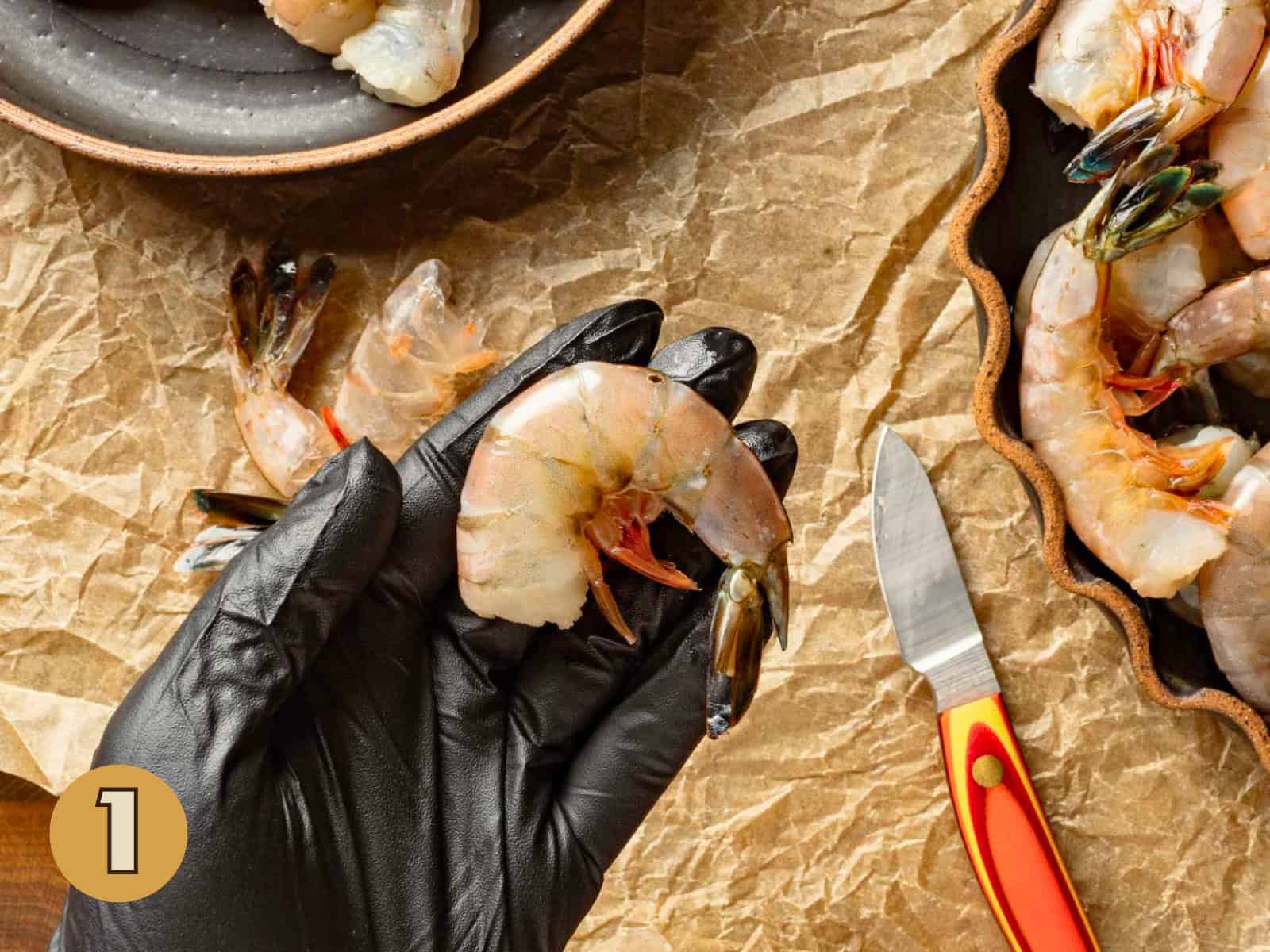
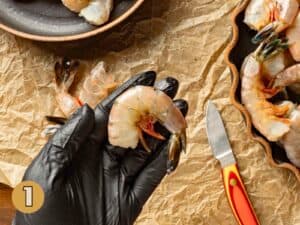
Step 1: Remove the head if it’s still intact by pinching and pulling.
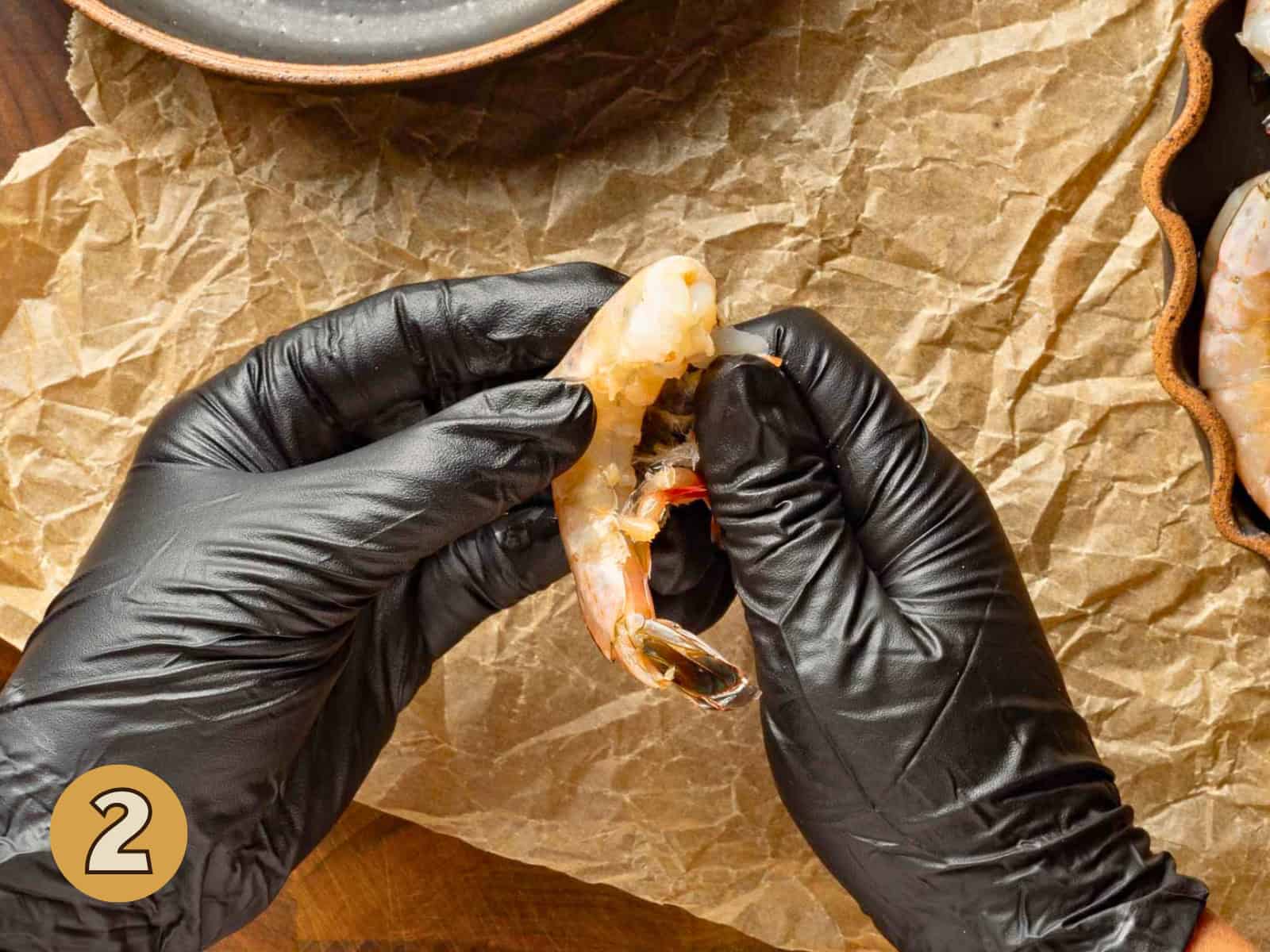
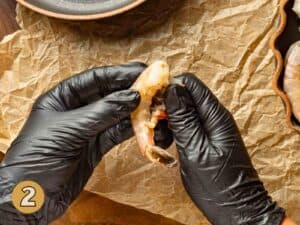
Step 2: Pinch the legs with your thumb and pointer and peel to one side. They should easily peel back.
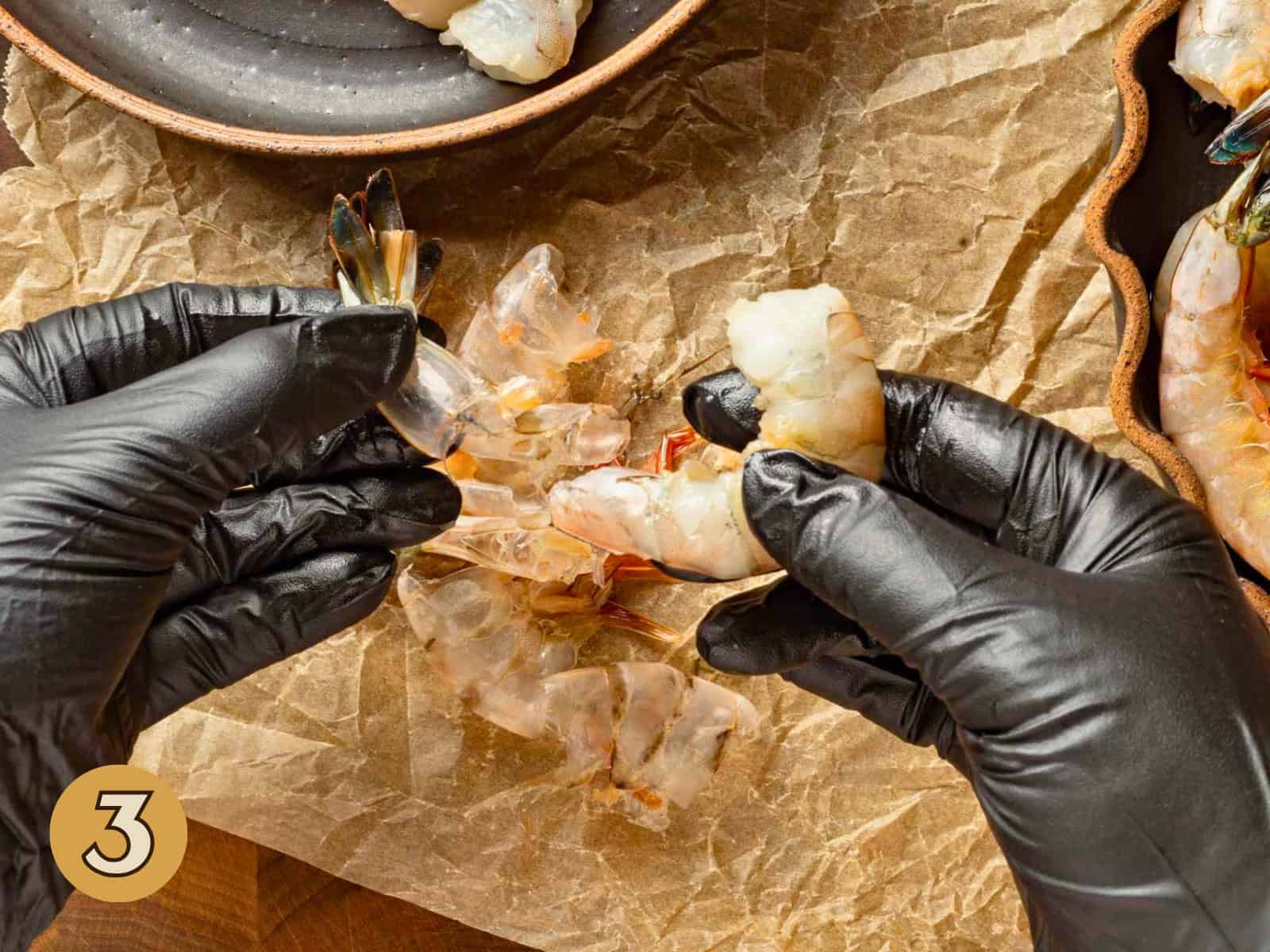
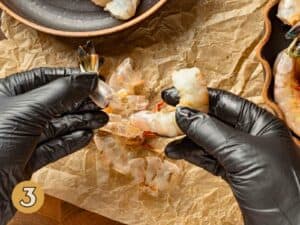
Step 3: Pulling back the legs will pull off the rest of the shell segments. You can choose to leave the tail segment on or off.
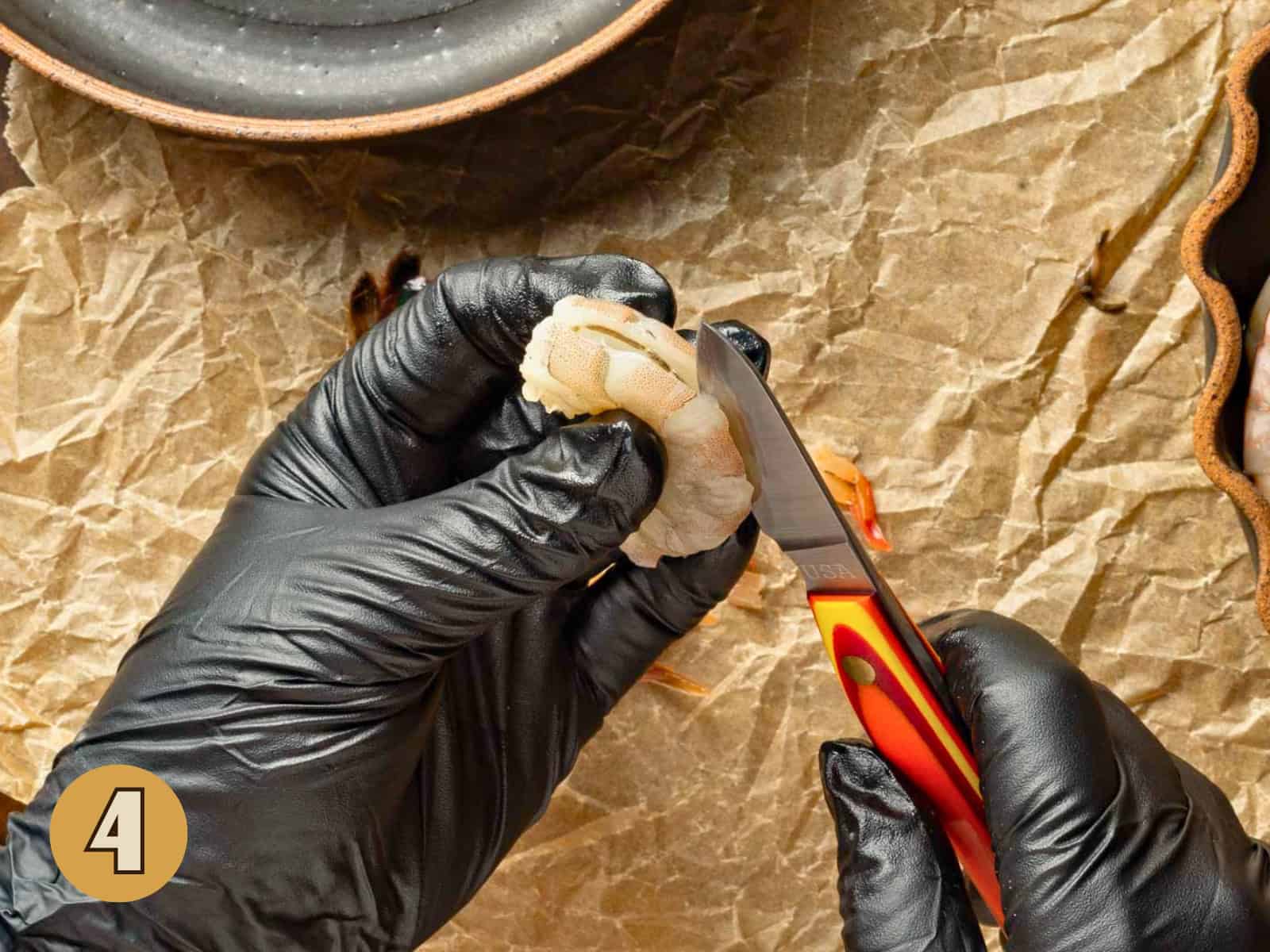
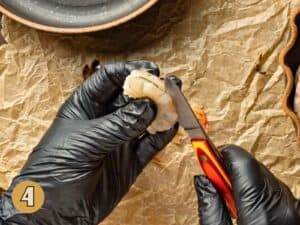
Step 4: With kitchen shears or a sharp paring knife, make an incision about ¼ inch deep along the back of the shrimp to reveal the vein.
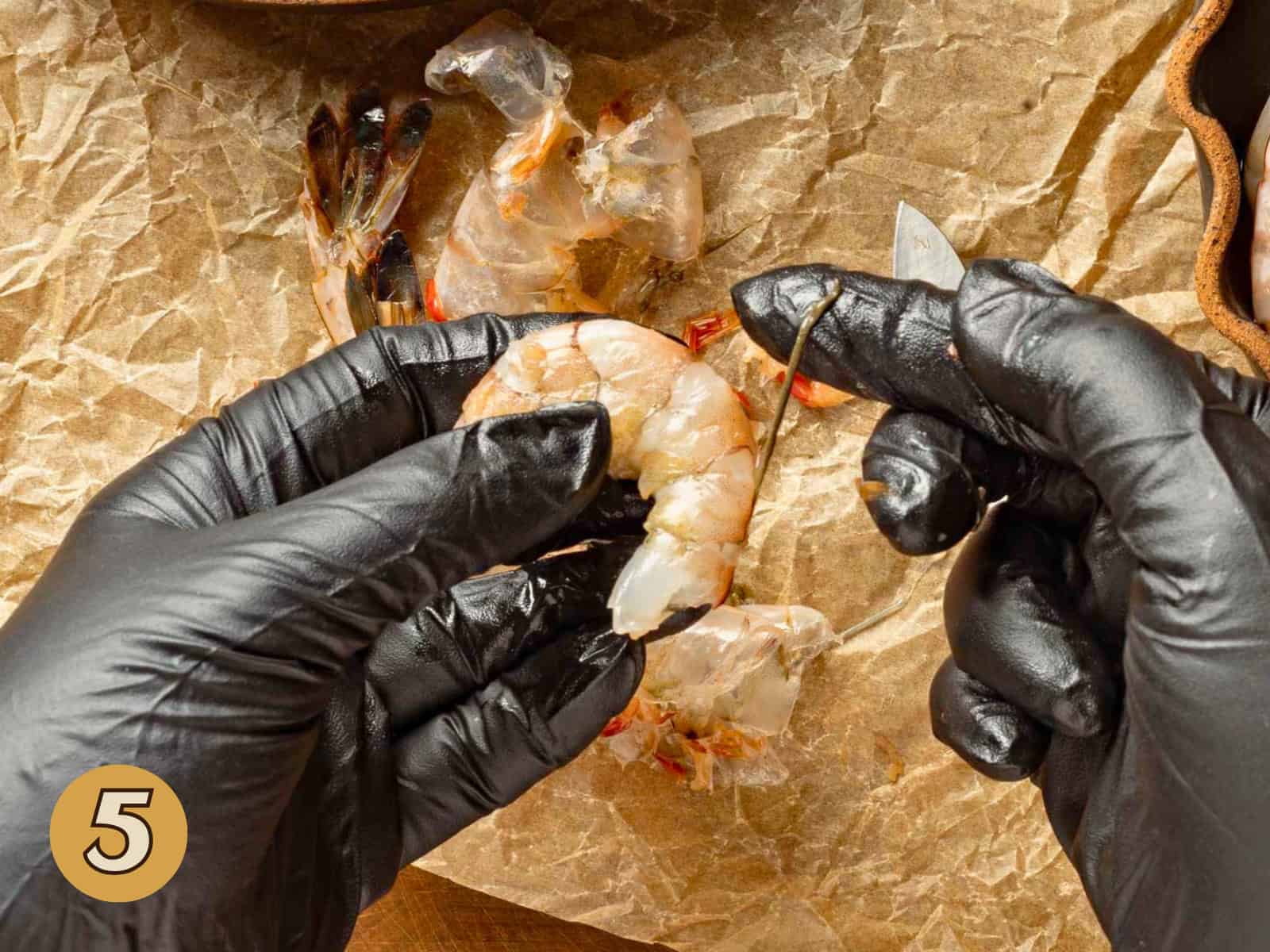
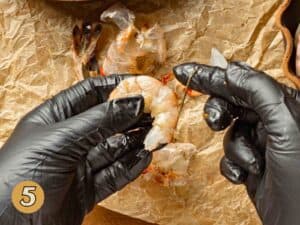
Step 5: Gently pull the vein out and discard. It may be dark brown, beige, or orange.
Step 6: Finally, rinse the shrimp in cold water to remove any remaining grit or shell pieces and use in your dish!
How to Devein Shrimp Without Peeling
If you want to leave the shells on for cooking, you can still devein the shrimp using the same method. With the shell still on, make a cut along the back of the shrimp with kitchen shears. Gently remove the vein. Prepare the shrimp with the shells on per your recipe.

Lauren’s Tips
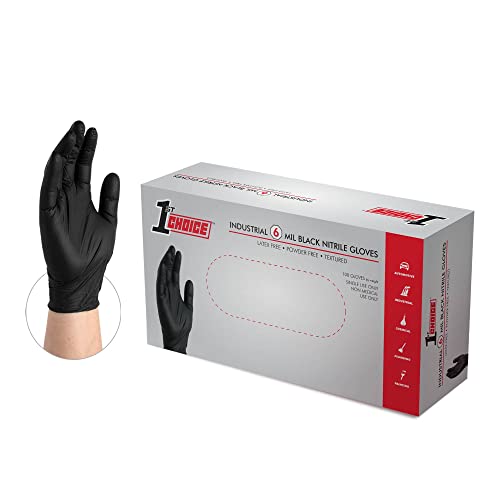
- Use gloves for cleaner work. I like these food safe nitrile gloves.
- To make the process quicker do it in stages. Peel all the shrimp first, then make cuts along the back and remove all the veins after.
- Peel under running cold water to make removing the shell easier.
- Remove the veins, especially for larger shrimp.
- Save those heads and shells! Shrimp shells, especially the heads, make amazing homemade shrimp stock.
- Need help picking the right size shrimp for your recipe? See shrimp sizes explained.
Equipment Needed
 Buy Now →
  Buy Now →
  Buy Now →
  Buy Now →
 Do You Have to Devein Shrimp?
The “vein” on a shrimp isn’t really a vein at all. It’s the digestive tract. Yes, that means the vein is full of shrimp poop!
While technically edible, the vein can have a sandy gritty texture making it unpleasant to eat. This is especially true the larger the shrimp are. For these reasons, it’s best to devein the shrimp before cooking or eating them, unless the shrimp are very small.
Tail On or Tail Off?
Whether to leave the tail on or off while peeling shrimp is a personal preference and depends on the dish you are making. Leaving the tail on can make a pretty presentation, but can also be annoying to have to finish peeling the shrimp before taking a bite. Here’s when it’s best to leave the tail on or remove it.
- Leave the tail on for finger food type dishes like shrimp cocktail, stuffed shrimp, and larger fried shrimp since the tail can act as a handle making it easier for dipping.
- Remove the tail when making dishes like shrimp étouffée, shrimp bisque, and shrimp pasta since the shrimp will be submerged in the sauce, and harder for diners to dig in and fish the tail out.
- Leave the whole shell on for recipes like BBQ shrimp and cajun shrimp boil since the shell will enhance the flavor while cooking.
Storage & Make Ahead
Storage: Once your shrimp are peeled, rinsed, and dried off, put in an airtight container in the refrigerator for 1-2 days until you are ready to use.
Freeze: Cover a baking sheet with parchment paper. Place rinsed and dried peeled shrimp on the baking sheet in a single layer. Freeze, then transfer to a freezer bag for up to 6 months.
Lagniappe
Lagniappe: LAN-yap – a little something extra
Louisiana is the top producer of wild-caught shrimp in the U.S. The shrimping industry is a vital part of the state’s economy, culture, and cuisine. From bustling seafood docks to family-owned shrimp boats, generations of fishermen have helped supply the fresh Gulf shrimp that define many iconic Cajun and Creole dishes.
Shrimp Recipes
Now that you know how to peel and devein shrimp, what are you going to make with them?
No posts
No posts
See more Shrimp Recipes
Now that you know how to peel and devein shrimp, put your skills to use in a delicious Shrimp Étouffée or Seafood Gumbo! What’s your favorite shrimp dish? Let me know in the comments!”
How to Peel and Devein Shrimp Like a Pro
Ingredients
- Shrimp, size and amount per your recipe (fresh or frozen)
Instructions
- Remove the head if it’s still intact by pinching and pulling.

- Pinch the legs with your thumb and pointer and peel to one side. They should easily peel back.
- Pulling back the legs will pull off the rest of the shell segments. You can choose to leave the tail segment on or off.
- With kitchen shears or a sharp paring knife, make an incision about ¼ inch deep along the back of the shrimp to reveal the vein.
- Gently pull the vein out and discard. It may be dark brown, beige, or orange.
- Finally, rinse the shrimp in cold water to remove any remaining grit or shell pieces and use in your dish!
Notes
- To make the process quicker do it in stages. Peel all the shrimp first, then make cuts along the back and remove all the veins after.
- Peel under running cold water to make removing the shell easier.
- Remove the veins, especially for larger shrimp.
- Save those heads and shells to make homemade shrimp stock.
- To remove the vein with the shell still on, make a cut along the back of the shrimp with kitchen shears. Gently remove the vein.
- Storage: Once your shrimp are peeled, rinsed, and dried off, put in an airtight container in the refrigerator for 1-2 days until you are ready to use.
-
Freeze: Cover a baking sheet with parchment paper. Place rinsed and dried peeled shrimp on the baking sheet in a single layer. Freeze, then transfer to a freezer bag for up to 6 months.
Frequently Asked Questions
I highly recommend deveining shrimp before eating them. The vein is actually the digestive tract, and can be gritty to eat. Unless the shrimp are very small, you should devein them.
Yes, you can use frozen shrimp. Just thaw them before peeling.
You can thaw frozen shrimp in 2 ways. Put shrimp in a large covered container and place in the refrigerator overnight. To thaw shrimp quickly, put them in a colander and run cold water over them until they are thawed, mixing a few times.

Meet Lauren
I’m the blogger, recipe developer, food photographer, and otherwise food obsessed gal behind Lauren From Scratch. I was born and raised in New Orleans and lived in South Louisiana most of my life. Growing up around Cajun country has instilled a love of food that runs deep in my bones. I am passionate about food and teaching you how to make mouth-watering Louisiana inspired dishes in your own kitchen — and most recently, on Food Network’s 100 Cooks!
where y’at?
Let’s get social, cher! Come hang out with me and get a little peek into the life of a food blogger.